Types of Dental Implants
What Are Types of Implants?
Knowing which types of dental implants exist helps you understand what your dentist is recommending — and why the right choice depends on your bone, health, and treatment plan.

IMPLANT TYPES
The Main Types of Dental Implants Explained
Dental implants are broadly categorised by where they are placed in relation to the jawbone. Understanding the different types of dental implants means understanding four main groups: endosteal, subperiosteal, mini, and zygomatic.
-
Endosteal implants Placed directly into the jawbone — the most widely used approach today. Typically a threaded titanium post that integrates with the bone over a healing period. Among all types of dental implants, endosteal is the category your dentist is most likely to recommend first.
-
Subperiosteal implants Rest on top of the jawbone, beneath the gum tissue, using a custom metal framework. Typically considered when bone height is insufficient for endosteal placement and bone grafting is not a suitable option.
-
Mini dental implants Narrower in diameter than standard implants — generally under 3 mm. Used when available bone is too narrow for a standard implant, as temporary anchorage in orthodontic treatment, or to stabilise lower dentures.
-
Zygomatic implants Substantially longer, anchored in the cheekbone rather than the upper jawbone. Reserved for patients with severe bone loss in the upper jaw who are not candidates for conventional implants or bone grafting.
COMMON vs RARE
Endosteal vs Subperiosteal: Which Is More Common?
Endosteal implants are by far the more common choice in contemporary dentistry. Advances in bone grafting and guided surgery techniques mean that most patients can be treated with standard endosteal implants after appropriate preparation. When a patient asks about the types of dental implants available to them, the conversation typically begins and ends with endosteal options unless specific bone or health factors indicate otherwise.
Subperiosteal implants were more frequently used before bone grafting became routine. Today they are infrequently prescribed and reserved for specific clinical situations. If you are told a subperiosteal approach is being recommended for your case, ask your clinician to walk you through the reasoning and the alternatives that were evaluated.
MATERIAL DIFFERENCES
Titanium vs Zirconia Implants
The material an implant is made from affects its mechanical properties, aesthetic integration, and how the surrounding tissue responds. This is one of the most commonly asked questions when patients explore their implant options Istanbul and internationally, particularly when comparing types of dental implants by material.
-
Titanium implants The clinical standard for decades. Lightweight, strong, and highly biocompatible. Available in a wide range of sizes and designs, compatible with virtually all prosthetic options. The default choice for dental implant treatment Istanbul patients receive at Citydent.
-
Zirconia implants Made from high-strength ceramic — tooth-coloured and metal-free. A consideration for patients with documented metal sensitivity or specific aesthetic requirements, particularly in the front of the mouth. Typically one-piece in design, which limits angular adjustment during placement.
For most patients, titanium remains the recommended material. The decision is made with your clinician based on your examination findings and treatment goals.
NARROW-DIAMETER OPTION
Mini Dental Implants: What They Are and When Used
Mini dental implants follow the same principle as standard endosteal implants but are significantly narrower. This narrower diameter makes them appropriate in specific clinical scenarios.
- When bone width is insufficient for a standard-diameter implant without augmentation
- As temporary anchorage devices in orthodontic treatment to help move other teeth
- As stabilisation support for removable lower dentures in patients with limited bone
Mini dental implants are not a universal substitute for standard implants. They are a targeted option for defined clinical situations. Whether they suit your case is determined by your clinician after reviewing your bone structure and treatment objectives.
DESIGN & SURFACE
Implant Shape, Size, and Surface: What the Differences Mean
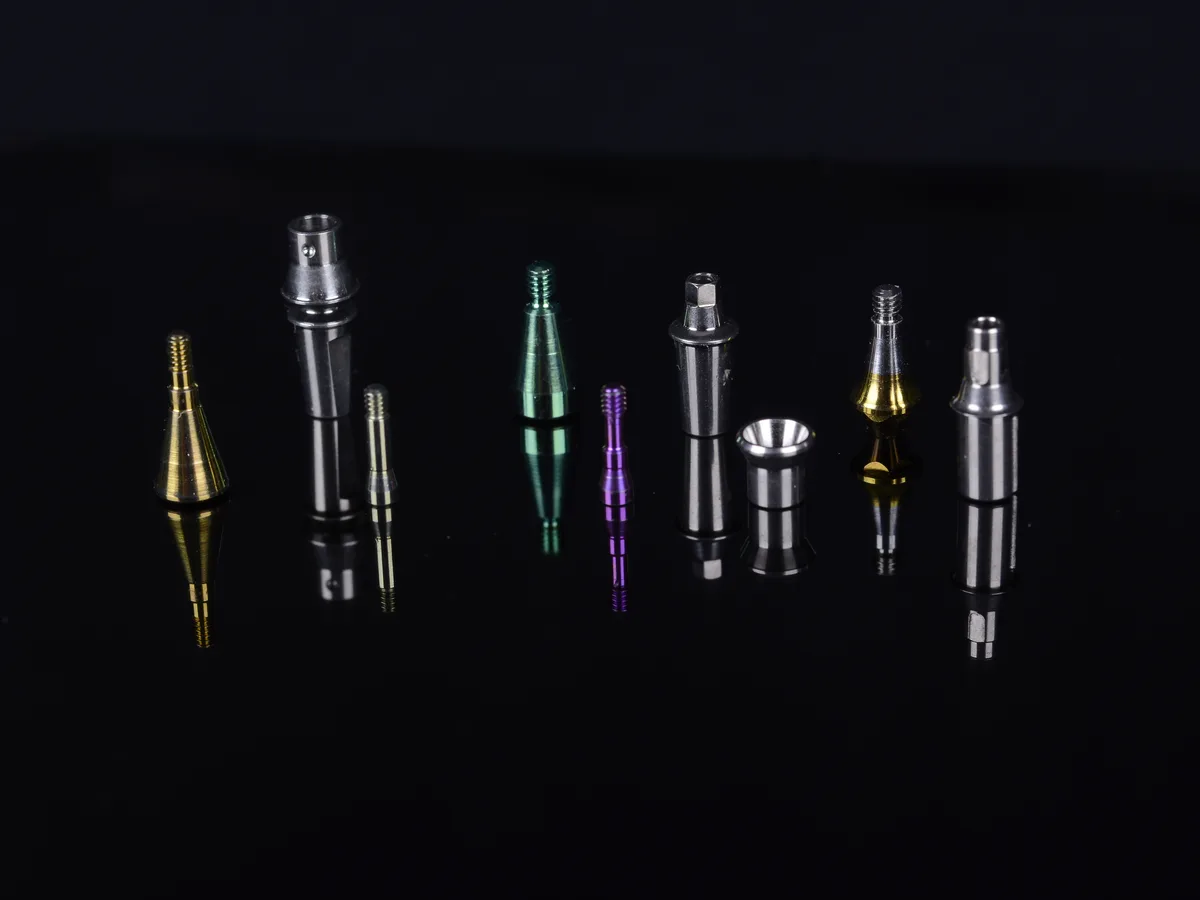
Beyond the primary classification, the different types of dental implants vary in several physical characteristics that affect how they perform.
These are technical decisions your clinician makes based on imaging and bone assessment. Understanding that these variables exist helps you know that implant selection is a considered clinical decision, not a single standard choice applied to every patient.
CITYDENT ISTANBUL
How the Right Implant Type Is Selected at Citydent Istanbul
Selecting the right type of dental implant is part of a structured treatment planning process. At Citydent Istanbul, this begins with a 3D CBCT scan that shows bone volume, density, and the positions of adjacent anatomical structures. A clear explanation of the types of dental implants available to you is part of every treatment planning conversation at Citydent Istanbul.
-
Bone quantity and quality Determines whether standard-length implants are appropriate or whether shorter alternatives, augmentation, or a different implant type is needed.
-
Tooth position and load Front teeth and back teeth have different aesthetic and mechanical demands. The implant design is matched to the expected chewing forces and visibility in each position.
-
Soft tissue condition Gum health and gum thickness influence both healing outcomes and long-term aesthetic results.
-
Prosthetic plan The final restoration — single crown, bridge, or full arch — affects which implant diameter, connection type, and placement angle are appropriate. Options include All on 4 Turkey Istanbul for full arch replacement.
-
Patient health factors Systemic conditions and bone metabolism all contribute to implant selection, reviewed together with your treating clinician.
For patients considering types of dental implants Turkey-wide or abroad, a full diagnostic record review is standard practice before any treatment recommendation is made at Citydent. Patients wanting to understand all their implant options in Istanbul are welcome to bring existing imaging for a second assessment. You can also read more about what a dental implant is or explore dental implant brands Istanbul used at the clinic.
QUESTIONS
Frequently Asked Questions
What is the most commonly used type of dental implant?
Endosteal titanium implants — typically threaded, root-form posts placed into the jawbone — are the most widely used type in contemporary implant dentistry. They are the baseline recommendation for patients with adequate bone volume and density.
Are zirconia implants as strong as titanium?
Modern zirconia implants have been developed to high mechanical standards and can perform well in appropriately selected cases. Titanium, however, has a longer clinical track record, is available in a wider range of sizes, and allows more flexibility in prosthetic design. The choice is a clinical discussion taking into account your bone anatomy, aesthetic priorities, and any documented sensitivities.
Who needs a subperiosteal implant?
Subperiosteal implants are rarely used today. They may be considered in specific cases where bone height is insufficient for standard endosteal implants and where bone grafting is contraindicated or not preferred by the patient. Your clinician will discuss all available alternatives before recommending this approach.
Can different implant types be combined in the same patient?
Yes. It is clinically acceptable to use implants of different lengths, diameters, or different designs in different areas of the same mouth when the bone anatomy and treatment plan call for it. What matters is that the overall prosthetic plan is coherent and each implant is appropriately selected for its position.
What does implant surface texture affect?
The surface texture of an implant influences how efficiently bone cells attach to and grow around it — a process known as osseointegration. Roughened or specially treated surfaces are associated with more predictable and often faster bone integration compared to older smooth-surface designs.
Is dental implant treatment in Istanbul different from treatment elsewhere?
The clinical principles of dental implant treatment Istanbul patients receive are consistent with internationally recognised implantology standards. The implant types, materials, and surgical protocols used at Citydent are the same categories used in leading European and North American clinics. Learn more on our dental implants Istanbul page, or explore flapless implant Istanbul and guided surgery implants Istanbul.