Daytime Teeth Clenching
If your jaw feels tight by mid-afternoon, or you catch yourself pressing your teeth together at your desk — you may already be experiencing daytime teeth clenching without realising it.
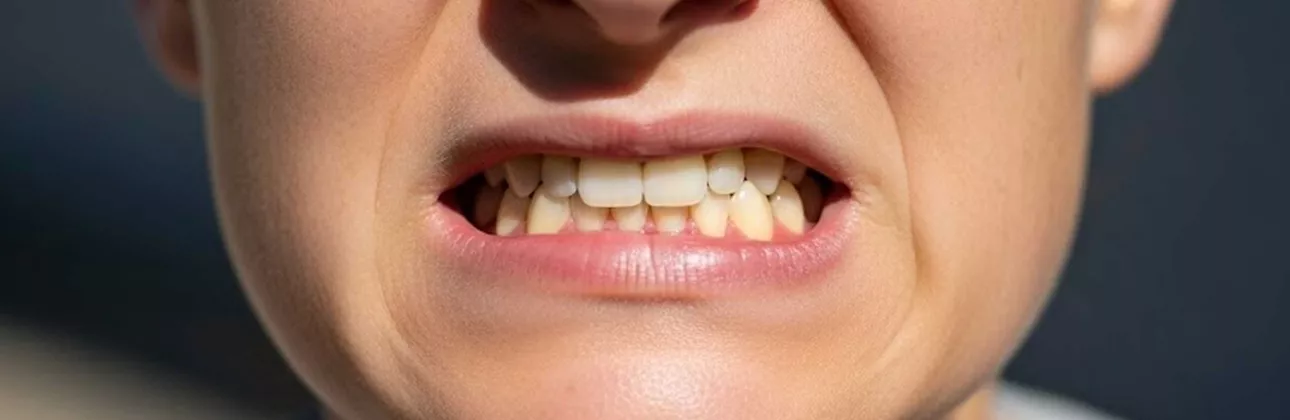
What Is Daytime Teeth Clenching?
Daytime teeth clenching, also known as awake bruxism, is the involuntary habit of pressing or grinding the upper and lower teeth together during waking hours. Unlike sleep bruxism, it does not always involve movement — many people simply hold their jaw under sustained tension throughout the day. The cumulative strain this creates on teeth, jaw muscles, and the temporomandibular joint (TMJ) can be significant over time.
Awake bruxism differs from sleep bruxism in one important way: the patient is at least partially conscious when it occurs. This means the habit is often responsive to awareness and behavioural techniques — something that makes early recognition particularly valuable.
Many people first notice it through secondary symptoms rather than teeth clenching during the day itself: jaw soreness by late afternoon, unexplained headaches, or a dentist pointing out wear patterns during a routine check.
If you are looking for a broader overview of teeth grinding and clenching, including night-time patterns, our Bruxism Treatment Istanbul page covers the full clinical picture.
Symptoms of Daytime Teeth Clenching
Symptoms vary in intensity and may develop gradually. The following patterns are commonly associated with awake bruxism.
-
Jaw tightness or soreness later in the day Muscles that have been under intermittent tension throughout the day tend to ache by the afternoon or evening, particularly around the jaw angle and cheeks.
-
Tension headaches starting from the temples The temporalis muscle — which runs along the side of the skull — is heavily involved in clenching. Sustained activation typically produces a dull, pressured headache that originates at the temples.
-
Tooth sensitivity and visible wear Repeated contact between opposing teeth gradually erodes enamel. Over time this produces flattened, shortened, or chipped surfaces — and teeth that are increasingly sensitive to temperature and pressure.
-
TMJ clicking or discomfort The temporomandibular joint sits directly in front of the ear. Clenching places sustained load on this joint, and clicking, popping, or restricted opening are common early signs of strain.
-
Neck and shoulder tension Jaw muscle overactivity rarely stays isolated. Chronic clenching typically creates a chain of tension running from the jaw through the neck into the upper shoulders.
What Causes Daytime Teeth Clenching?
Understanding jaw clenching causes helps in building an effective management strategy. The most commonly identified drivers include the following.
-
Stress and emotional tension Psychological stress is the most consistently identified driver of awake bruxism. Jaw clenching is a common unconscious stress response — the body prepares for threat by tensing large muscle groups, and the jaw is frequently involved.
-
Deep focus and concentration habits Many people clench during concentrated work without awareness. The habit often becomes associated with specific activities: keyboard use, driving, or reading.
-
Posture and screen time A forward head posture — common in desk-based work — alters the resting position of the jaw and may predispose the muscles to sustained tension.
-
Caffeine and stimulant use Higher caffeine intake is associated with increased muscle activity. Daytime teeth clenching treatment plans typically include a review of stimulant consumption as a contributing factor.
-
Medication side effects Certain medications, particularly SSRIs, have a known association with bruxism as a side effect. This should be raised with the prescribing physician — not adjusted without medical guidance.
How to Stop Daytime Teeth Clenching
Understanding how to stop clenching teeth starts with awareness. Many patients find that simply recognising the habit allows them to interrupt it throughout the day.
Practical strategies that tend to be effective:
-
Jaw resting position Lips lightly closed, teeth slightly apart, tongue resting on the roof of the mouth. This is the neutral jaw position — teeth should not be in contact except during swallowing and chewing.
-
Scheduled check-ins Setting a reminder every hour to scan for jaw tension and consciously release it.
-
Stress reduction Mindfulness, structured breathing, or therapy addressing the underlying emotional drivers.
-
Posture correction Adjusting screen height and chair position to reduce forward head posture during work.
-
Custom occlusal splint For patients where clenching persists, a custom day guard provides a physical barrier between the teeth and reduces muscular effort. Our night guard Istanbul page explains how these appliances are designed and fitted.
For patients seeking awake bruxism treatment in Istanbul, a combined approach — covering awareness techniques, an occlusal appliance where needed, and professional monitoring of wear — forms the basis of a structured daytime bruxism Istanbul management plan.
Jaw Exercises for Daytime Clenching
Regular movement and stretching can help retrain overworked jaw muscles toward a more relaxed baseline.
Controlled Opening
Slowly open the mouth to a comfortable maximum, hold for three to five seconds, release. Repeat five to eight times. This stretches the masseter and temporalis muscles without strain.
Resistance Opening
Place the thumb under the chin, apply gentle upward resistance while slowly opening the mouth. Hold briefly and repeat. Builds awareness of the jaw opening pathway.
Masseter Massage
Apply firm circular pressure with the fingertips to the muscles at the jaw angle. A warm compress applied for ten minutes beforehand typically improves the response.
Tongue Posture Training
Practise resting the tongue lightly on the roof of the mouth, with lips closed and teeth slightly apart. This is the neutral jaw position — practising it throughout the day helps the habit become automatic.
Jaw Pain From Daytime Clenching — When Should You Act?
Occasional mild jaw aching at the end of a stressful day is common and typically resolves with rest. However, the following warrant clinical assessment:
- Jaw pain that persists beyond a day or two and recurs regularly
- Clicking, locking, or restricted opening of the jaw
- Visible flattening or chipping of the teeth
- Headaches that recur multiple times per week
- Neck or shoulder tension that does not respond to posture correction
If wear is already present, the approach may involve protective restorations — composite veneers for clenchers Istanbul are one option worth discussing for patients where enamel damage is a concern.
When clenching reaches the point of causing measurable dental damage or daily discomfort, a structured daytime teeth clenching treatment plan — covering both the protective and behavioural elements — is the appropriate next step. You are welcome to speak to one of our dentists to discuss your specific situation. Our dental clinic in Istanbul offers comprehensive assessment for jaw-related concerns including daytime bruxism Istanbul patients present with.
Frequently Asked Questions
Can stress alone cause daytime teeth clenching?
Yes. Stress is the most commonly identified trigger for awake bruxism. The jaw clenching response can become habitual even after the acute stressor has passed — which is why addressing the habit directly, alongside stress management, is usually more effective than stress reduction alone.
Is daytime teeth clenching the same as bruxism?
Awake bruxism is a subtype of bruxism. Bruxism as a category includes both sleep bruxism and awake bruxism — they share similar consequences but differ in their mechanisms and typical management approaches. More detail is available on our Bruxism Treatment Istanbul page.
How do I know if I'm clenching during the day?
Common indicators include jaw soreness by late afternoon, headaches originating at the temples, and tooth sensitivity that your dentist attributes to wear rather than decay. Many patients notice teeth clenching during the day first through a pattern of afternoon headaches rather than any direct awareness of the habit.
Can a mouth guard help with daytime clenching?
A custom-fitted day splint can protect the teeth and reduce the muscular load involved in clenching. It does not eliminate the habit, but it significantly reduces the dental consequences while behavioural strategies are being worked on. Your treating dentist at CityDent Istanbul will advise on whether an appliance is appropriate for your situation.
Does daytime teeth clenching damage teeth?
Over time, yes. Sustained clenching erodes enamel, can cause fractures, and places excessive load on existing restorations. The rate of damage depends on the frequency and force involved, and on whether any protective measures are in place.
When should I see a dentist about jaw clenching?
If symptoms are recurring, if you can see visible wear on your teeth, or if jaw discomfort is affecting your daily quality of life, a clinical assessment is appropriate. Earlier intervention generally means simpler management — daytime teeth clenching treatment is considerably more straightforward before structural damage has accumulated.