IMPLANT PREPARATION
Sinus Lift Istanbul: Procedure, Recovery & When It Is Needed
A sinus lift Istanbul procedure creates the bone volume needed for dental implants in the upper back jaw — allowing safe, stable implant placement where bone height alone is insufficient.
This page covers the procedure in detail, what recovery looks like, and which patients may be suitable for implants without augmentation.
OVERVIEW
What Is a Sinus Lift?
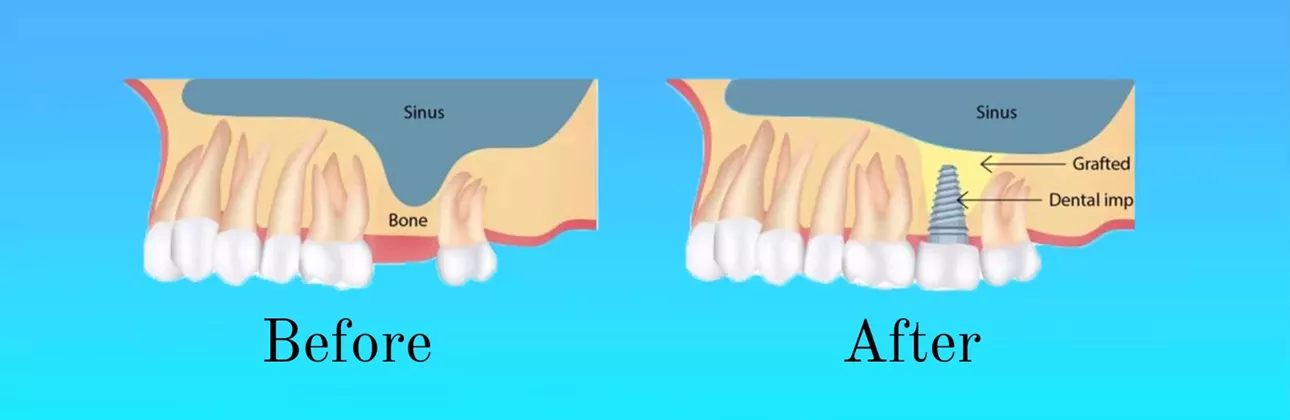
The maxillary sinuses are air-filled cavities that sit above the upper back teeth. When molars or premolars are lost, the bone beneath the sinus gradually resorbs, and the sinus itself can expand downward over time. If less than 4–5 mm of bone height remains, standard dental implants cannot be placed without first rebuilding that height.
A sinus lift Istanbul — also referred to as sinus floor elevation Istanbul or sinus augmentation Istanbul — addresses this by lifting the sinus membrane and placing bone graft material below it. As the graft integrates over several months, the area becomes a stable foundation for implants. Patients seeking sinus lift Istanbul treatment typically arrive with a CBCT scan showing insufficient posterior maxillary bone.
INDICATIONS
When Is a Sinus Lift Required Before Implants in Istanbul?
The most common reason patients are referred for sinus lift surgery in Istanbul is insufficient vertical bone in the posterior maxilla. This is assessed with a CBCT scan showing the exact bone height and sinus anatomy. For those considering maxillary sinus lift Turkey, bone height below 4–5 mm in the upper molar region is the key threshold.
Indications that a sinus lift may be necessary include:
- Bone height below 4–5 mm in the upper molar or premolar region
- Long-term tooth loss in the upper back jaw, allowing progressive bone resorption
- Enlarged sinus cavity that has expanded downward following tooth loss
- Failed or removed implant in the same region, leaving insufficient bone
Your treating dentist will review the scan to determine whether augmentation is needed or whether shorter or angled implants are a suitable alternative.
TECHNIQUE
Open vs Closed Sinus Lift: Which Approach Is Used?
Two techniques are used for sinus floor elevation, and the appropriate choice depends on how much bone augmentation is required.
Both sinus lift Istanbul approaches are routinely performed at CityDent Istanbul. The technique selected is documented in the treatment plan provided to you before surgery.
PROCEDURE
What Happens During Sinus Lift Surgery in Istanbul?
The sinus lift Istanbul procedure follows a consistent sequence, whether open or closed technique is used.
- 1Imaging and planning — CBCT scan reviewed; bone height, sinus anatomy and graft volume calculated
- 2Local anaesthesia — the area is fully anaesthetised before any surgical steps begin
- 3Surgical access — the gum is gently opened to expose the outer bone surface
- 4Membrane elevation — the Schneiderian membrane is carefully lifted away from the sinus floor
- 5Graft placement — bone graft material is placed in the created space; graft type is selected based on clinical assessment
- 6Closure — the site is sutured and post-operative instructions are provided
The procedure typically takes 60–90 minutes per side. In selected cases, implants can be placed at the same time as the sinus lift; in others, a healing period is observed first.
RECOVERY
Sinus Lift Recovery: Timeline and What to Expect
Recovery after sinus lift surgery in Istanbul follows a predictable pattern for most patients.
-
Days 1–10Swelling in the cheek or under-eye area, mild pressure in the sinus region, and some nasal discharge are normal. Discomfort is usually manageable with pain relief as advised by your dentist. Blowing the nose, sneezing forcefully, and air travel should be avoided during this phase.
-
Weeks 2–4Swelling resolves and most patients return to normal activity. Sutures are typically removed at the follow-up appointment within this window.
-
4–9 MonthsBone graft integration takes time. A 2025 systematic review of randomised controlled trials found that implant survival rates at sinus-augmented sites are comparable whether or not additional graft material is used — indicating that the procedure, when performed correctly, creates a reliable outcome. A follow-up scan confirms when the area is ready for implant placement.
For detailed post-operative guidance, see our surgical aftercare page and our guide on recovery after implant procedures.
ALTERNATIVES
Can You Get Dental Implants Without a Sinus Lift?
For some patients, dental implants can be placed without sinus lift Istanbul surgery. Whether this applies to you depends on remaining bone volume and the number of teeth being replaced.
-
Short implants (≤6 mm) A 2022 meta-analysis found comparable short-term survival rates between short implants at posterior maxillary sites and standard implants placed after sinus augmentation — making short implants a less invasive option for appropriate cases. For patients considering sinus lift before implant Istanbul, this alternative is worth discussing at assessment.
-
Tilted implant systems (All-on-4) All-on-4 implants in Istanbul use angled posterior implants that avoid the sinus region entirely, making them a common choice for patients with advanced bone loss who need full-arch restoration. Sinus graft Istanbul procedures are not required for these systems.
-
Zygomatic and midface implants For severely resorbed maxillae, implants anchored in the zygoma or midface bypass the posterior maxilla altogether.
-
Anterior repositioning When only one or two molars need replacement, implants may be positioned more anteriorly where bone volume is adequate.
Your dental implant specialist in Istanbul will advise which approach fits your anatomy after reviewing your CBCT scan. A CBCT scan in Istanbul is the first step in determining your options.
COMPLICATIONS
Sinus Perforation: Causes, Symptoms and Management
Perforation of the Schneiderian membrane — the thin lining of the maxillary sinus — can occur during sinus lift surgery, tooth extraction, or apical procedures in the upper jaw. Small perforations under 5 mm typically heal without intervention if managed correctly.
Symptoms that may indicate sinus perforation:
- Sudden sharp pain in the upper jaw or cheek following surgery
- One-sided nasal discharge (clear or blood-tinged)
- Pressure or fullness below the eye
- Pain in upper molars or around the surgical site, particularly when bending forward
- Persistent swelling or tenderness in the sinus area
- Unusual taste or odour, which may signal secondary infection
If any of these symptoms develop after upper jaw treatment, contact your dentist promptly. Early assessment prevents minor perforations from developing into sinusitis.
SAFETY
Is Sinus Lift Surgery Safe? Risk Overview
Sinus lift surgery has a well-established track record. When performed by an experienced clinician using appropriate planning and graft materials, outcomes are predictable. Research reviewing over 1,700 sinus floor augmentation procedures confirms high implant survival across a range of graft materials.
Recognised risks, which are uncommon in planned cases:
- Membrane perforationThe most discussed complication; small tears are managed intraoperatively and typically heal without further intervention.
- Sinus infection (sinusitis)Managed with treatment as directed by your dentist; ENT referral is arranged if needed.
- Graft failureUncommon; the area can be regrafted if integration does not occur.
- Implant failure post-augmentationRare; affected implants can be removed and replaced after further healing.
- Swelling and bruisingExpected in the first few days; resolves without intervention in most cases.
- Suture breakdownManaged at a follow-up visit if it occurs.
A thorough pre-operative assessment, including CBCT imaging and a review of bone graft materials and techniques, significantly reduces the likelihood of complications. For questions about sinus lift Istanbul or to arrange a consultation at CityDent Istanbul, you are welcome to reach our team by phone, email, or WhatsApp.
QUESTIONS
Frequently Asked Questions
-
Is sinus lift surgery painful?
The procedure is performed under local anaesthesia, so discomfort during surgery is minimal. Post-operatively, mild pressure or soreness is normal for several days. Pain relief should be taken as advised by your dentist.
-
Can a sinus perforation heal on its own?
Small perforations under 5 mm typically resolve without additional intervention, provided nasal hygiene is maintained and nose blowing and forceful sneezing are avoided. Larger tears may require a protective membrane or further surgical management.
-
How long before implants after sinus lifting in Istanbul?
Bone graft integration typically takes 4–9 months. Your dentist will confirm readiness through follow-up imaging before scheduling the implant procedure.
-
What is the success rate of sinus lift surgery?
When performed by experienced clinicians with thorough pre-operative planning, sinus lift surgery is a highly predictable procedure. Systematic reviews consistently report high implant survival rates at augmented sites across a range of graft materials.
-
Are there alternatives to sinus lifting in Istanbul?
Depending on available bone volume, alternatives include short implants, tilted implant systems such as All-on-4, and zygomatic implants. Your dental implant specialist will advise which option suits your anatomy.
-
Is sinus lift covered by insurance in Turkey?
Coverage depends on your specific insurance policy. CityDent Istanbul does not handle insurance billing directly. We recommend contacting your insurer before your appointment to confirm what your plan covers for surgical dental procedures abroad.