Wisdom Tooth Extraction Aftercare: Pain, Swelling & Dry Socket
Wisdom tooth extractions leave a wound that needs time and care to close. Pain, swelling, and dry socket are the three most common concerns — understanding which signs are expected and which require attention makes a real difference to recovery.
This guide covers what to expect at each stage, how to manage discomfort at home, when dry socket should be suspected, and what to do if healing seems to stall.
How Long Does Wisdom Tooth Extraction Pain Last?
Pain after wisdom tooth extraction typically peaks within the first 24 to 48 hours and gradually improves over the following days. In most cases, notable discomfort resolves within five to seven days.
For straightforward extractions, patients usually find that each day feels slightly easier than the one before. For surgical or impacted wisdom tooth removals, the recovery timeline is often a few days longer, and some mild tenderness may persist into the second week.
If pain intensifies after the third day rather than improving — or if it returns after appearing to settle — this warrants attention. Worsening pain beyond the expected window, especially when accompanied by an unpleasant taste or odour, is one of the primary indicators of dry socket and should be reviewed by your dentist promptly.
What Helps Relieve Pain After Wisdom Tooth Removal?
Managing pain effectively during wisdom tooth recovery is largely about supporting the body's natural healing process rather than fighting it.
Applying a cold compress to the outside of the cheek during the first 24 hours helps reduce localised swelling and provides some numbing relief. After the initial 48 hours, switching to a warm compress can help ease residual stiffness and encourage circulation.
Resting with the head slightly elevated reduces the throbbing sensation that often worsens when lying flat. Avoiding activity that increases blood pressure to the face — vigorous exercise, bending over, or heavy lifting — for the first few days helps keep swelling under control.
Soft, cool foods place minimal stress on the healing site. Avoiding straws, smoking, and any forceful spitting or rinsing during the first 24 hours protects the blood clot that forms in the socket — dislodging this clot is the primary cause of dry socket.
After the first 24 hours, gentle warm saltwater rinses after meals help keep the socket clean without disturbing the healing tissue. For pain relief, follow the guidance provided by your dentist — the appropriate approach will depend on your individual circumstances and any relevant health considerations.
Is Severe Pain Normal After Wisdom Tooth Extraction?
Some degree of discomfort after extraction is entirely expected. Severe, escalating, or persistently intense pain — particularly pain that starts to worsen after day three — is not within normal range and usually indicates a complication.
Dry socket, the most common complication after wisdom tooth extraction, typically presents as sharp, throbbing pain that begins two to four days after the procedure and may radiate toward the ear, jaw, or temple. The pain is often disproportionately intense relative to the appearance of the site.
Infection at the extraction site can also cause significant pain alongside swelling that does not subside, fever, and occasionally a discharge from the socket.
If you are uncertain whether your pain is within the expected range following a wisdom tooth extraction in Istanbul, it is always appropriate to contact your dental clinic. Early review prevents minor complications from becoming more involved problems.
Dry Socket After Wisdom Tooth Extraction: Symptoms
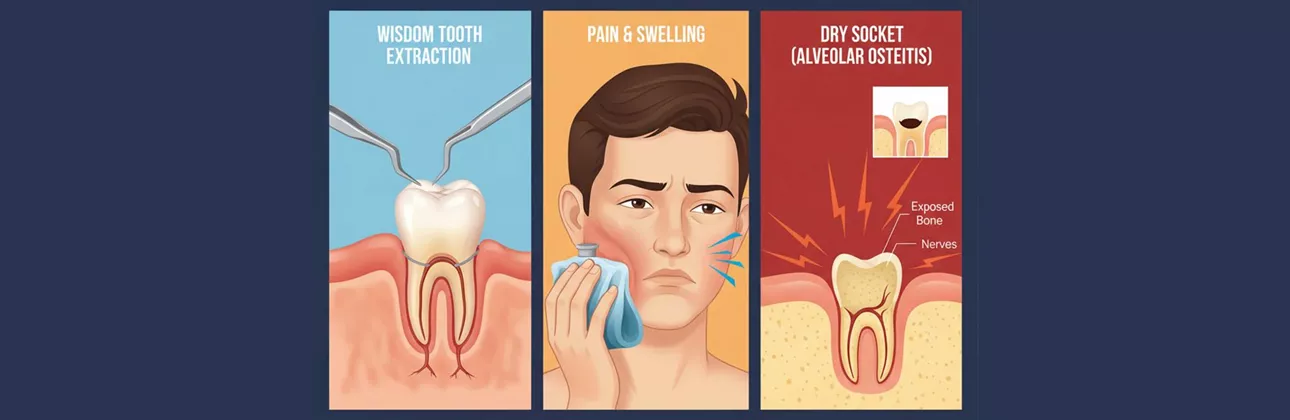
Dry socket — clinically referred to as alveolar osteitis — occurs when the blood clot that forms in the extraction socket is dislodged or fails to develop normally. Without this clot, the underlying bone and nerve endings are exposed to air, food, and bacteria, which causes significant discomfort and delays healing.
The condition typically becomes apparent two to four days after extraction and is more common following impacted wisdom tooth removal. Signs to be aware of include:
- Intense, throbbing pain that is notably worse than the expected post-extraction soreness
- Pain that radiates from the socket to the ear, eye, temple, or neck on the same side
- A visible socket with little or no clot present; the bone may appear pale or grey
- A persistent unpleasant taste or bad breath that does not resolve with oral hygiene
- Pain that returns or increases after a period of initial improvement
Dry socket does not resolve on its own in the same way as uncomplicated extraction healing. Professional intervention is required to clean the socket and place a soothing dressing that allows recovery to progress. If you suspect dry socket following dental extraction in Istanbul, contact your clinic promptly.
Dry Socket Treatment: What Your Dentist Will Do
If dry socket is confirmed, treatment is straightforward and typically provides significant relief within a short time of the first appointment.
Your dentist will gently irrigate the socket to remove any debris, then place a medicated dressing directly into the socket. This dressing protects the exposed bone and nerve, reduces pain, and creates the conditions needed for healing to resume.
Depending on the severity, you may need to return for dressing changes every one to two days until the socket begins to close naturally. Full resolution generally takes one to two weeks from the start of treatment.
Home care guidance will be updated after each visit to reflect where healing has reached. Following this guidance carefully — including advice on oral hygiene around the site, diet, and activity — is the most reliable way to support a smooth recovery after wisdom tooth extraction in Istanbul.
How to Prevent Dry Socket After Wisdom Tooth Removal
Not every case of dry socket is preventable, but adherence to aftercare instructions substantially reduces the risk. The most important factors are:
- Avoid anything that creates suction in the mouth. Using straws, smoking, and forceful spitting all generate negative pressure that can dislodge the clot in the hours and days following a wisdom tooth extraction. Smoking also impairs circulation and reduces oxygen supply to healing tissue, independently increasing the risk of complications.
- Protect the clot during the first 24 hours. Avoid rinsing, spitting, or eating on the affected side. These actions can mechanically disturb the socket before the clot has had time to stabilise.
- After the first 24 hours, rinse gently. Warm saltwater rinses after meals help clear debris from the socket without the pressure that could disrupt healing. Vigorous rinsing should be avoided for at least the first week.
- Eat on the opposite side. Keeping food away from the extraction site for the first several days reduces both mechanical disruption and the risk of infection from trapped food particles.
- Follow all post-operative instructions. The aftercare advice provided by your dentist is specific to your extraction and clinical situation — it is the most reliable framework for avoiding complications following wisdom tooth removal. For context on the extraction procedure itself, see our dental extraction Istanbul guide.
How Long Does Swelling Last After Wisdom Tooth Extraction?
Swelling after wisdom tooth extraction typically follows a predictable pattern. It builds over the first 48 to 72 hours, often appearing more pronounced on the second or third day than immediately after the procedure. This is a normal part of the inflammatory healing response.
From around day four or five, swelling begins to subside noticeably. In most cases it has largely resolved by the end of the first week, though mild puffiness or tightness around the jaw may persist slightly longer, particularly after surgical or impacted extractions.
Swelling that worsens significantly after the third day, or that is accompanied by fever, intense pain, or visible signs of discharge, warrants prompt review. These findings together may indicate infection signs after extraction Istanbul rather than normal post-operative inflammation.
How to Reduce Swelling After Wisdom Tooth Removal
Cold compresses applied during the first 24 to 36 hours are the most effective method for limiting swelling after wisdom tooth extraction. An ice pack or cold cloth held against the outside of the cheek — applied in 15 to 20 minute intervals — helps constrict local blood vessels and reduce fluid accumulation in the tissue.
After approximately 48 hours, switching to a warm compress encourages circulation and helps soften residual stiffness in the jaw.
Keeping the head elevated while resting — using an extra pillow while sleeping — reduces blood pressure in the face and helps limit swelling, particularly during the first two or three nights.
Avoiding strenuous physical activity for the first three to five days prevents the increase in blood flow that can prolong or worsen post-operative swelling. Staying well hydrated and eating soft foods supports overall recovery without placing unnecessary stress on the healing site. Patients who also experience pain after wisdom tooth removal will often find that swelling and pain respond to the same aftercare measures.