Teeth Whitening Side Effects
Teeth whitening side effects affect a significant proportion of patients to some degree — ranging from brief sensitivity to temporary changes in colour uniformity. For most people, these effects are mild and resolve within a few days. Understanding which teeth whitening side effects are expected, which are worth monitoring, and when to contact your dentist helps you manage the process with confidence.
What to Expect After Whitening
The teeth whitening side effects described below are the most frequently reported following both in-clinic and at-home whitening treatments. Each section covers the likely cause and the typical course of resolution. Knowing which teeth whitening side effects are normal also makes it easier to recognise those that fall outside the expected range.
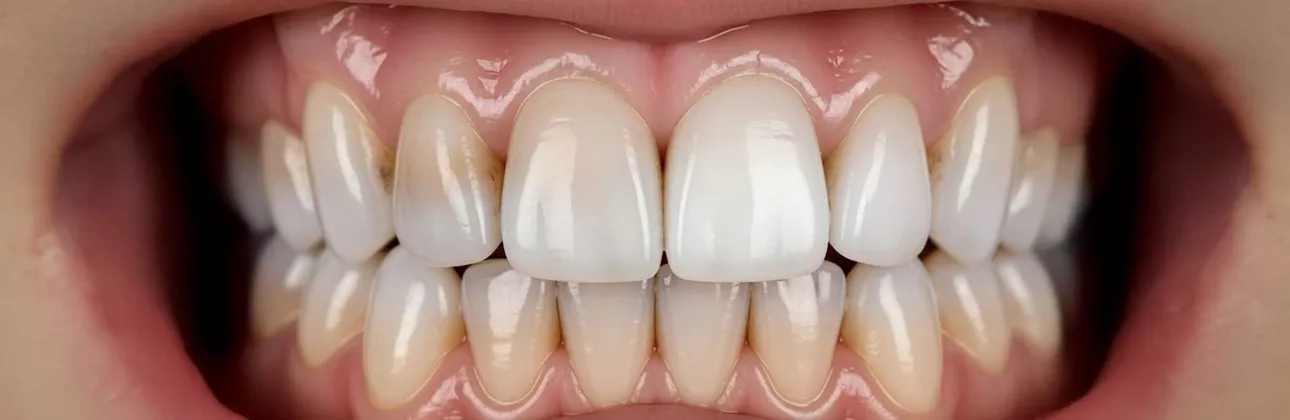
Blotchy or Uneven Colour
Temporary dehydration of enamel causes uneven tone — typically resolves within 24–72 hours as the teeth rehydrate.
White Spots
Pre-existing areas of under-mineralised enamel become more visible after whitening lightens the surrounding surface.
Surface Restaining
Pigment-rich foods or drinks consumed while enamel pores are still open can cause early restaining — not permanent.
Tooth Sensitivity
The most frequently reported side effect. Typically a short, sharp response to cold — usually subsides within 1–3 days.
Gum Irritation
Gel contact with soft tissue causes localised redness or tenderness — preventable with accurate application and fitted trays.
Over-Whitening Effects
Excessive frequency can lead to persistent sensitivity, enamel thinning, or an over-bleached appearance difficult to reverse.
Blotchy Colour and White Spots After Whitening
Blotchy or uneven colour in the days following whitening is one of the most commonly reported concerns. These patches — which may appear as white, chalky or slightly cloudy areas — are typically caused by temporary dehydration of the enamel surface. Whitening agents work by opening enamel pores, and the resulting moisture loss can cause areas of differing porosity or mineral density to reflect light unevenly.
In most cases, the blotchy appearance fades within 24 to 72 hours as the enamel rehydrates and colour evens out. If uneven tone persists beyond a week, your dentist can assess whether the underlying cause is enamel irregularity, uneven gel application, or a difference in how existing restorations respond to whitening. Follow-up options may include a targeted second session, surface microabrasion, composite bonding, or a remineralisation protocol — depending on the specific cause.
White Spots After Whitening
White spots that become more noticeable after whitening were usually present beforehand. These spots typically represent areas of under-mineralised enamel — a condition known as enamel hypoplasia — or the early stages of demineralisation. Among the teeth whitening side effects patients find most unexpected, white spot visibility ranks highly; the whitening process does not create these spots but makes them more apparent by lightening the surrounding tooth surface.
Common underlying causes include fluorosis during tooth development, enamel formation irregularities, or prolonged contact with fixed orthodontic appliances. If white spots remain visible after a few days of rehydration, your dentist can advise on options such as remineralising pastes, microabrasion, or, in more pronounced cases, composite coverage. For a detailed overview of whitening treatment options, see our page on professional teeth whitening in Istanbul.
Restaining, Sensitivity, and Enamel Care
Some patients notice what appears to be new staining shortly after whitening. Whitening stains of this kind are rarely a sign that the treatment has failed — they usually reflect post-treatment habits during the period when enamel pores remain more open and teeth are particularly susceptible to pigment uptake. Surface stains are among the more manageable teeth whitening side effects and respond well to prompt post-treatment care.
Tea, coffee, red wine, and tobacco are the most frequent culprits in the first 48 hours after treatment. Avoiding dark-coloured foods and beverages during this window, rinsing promptly after eating, and using a gentle whitening toothpaste can minimise early restaining. Surface whitening stains that develop after treatment are not permanent and can typically be addressed through professional polishing or a brief touch-up. The what to avoid after whitening guide sets out the specific care steps that help protect and prolong whitening results.
Sensitivity and Short-Term Tooth Pain
Teeth whitening sensitivity is the most frequently reported side effect across all whitening methods. Whitening sensitivity typically presents as a sharp, short-duration response to temperature changes — particularly cold — and is caused by the whitening agent temporarily increasing the permeability of the enamel, which allows thermal stimuli to reach the nerve more easily.
Tooth sensitivity after whitening usually subsides within one to three days. Using a toothpaste formulated for sensitive teeth, avoiding temperature extremes in food and drink, and brushing gently with a soft-bristled brush during this period are the standard approaches recommended by most dental practitioners. Ensuring a thorough professional teeth cleaning before treatment can also reduce the likelihood and intensity of whitening sensitivity. If sensitivity persists beyond a week or increases, your dentist should assess for underlying causes such as enamel wear, exposed dentine, or pre-existing cracks.
Can Whitening Damage Your Teeth?
Professional whitening, when planned and applied according to clinical protocols, does not cause structural damage to healthy enamel. The whitening agents used in clinically supervised treatments are formulated to achieve colour change within safe exposure limits.
The risk of enamel damage increases when whitening is performed excessively, when over-the-counter products with high peroxide concentrations are used unsupervised, or when treatment is repeated at intervals that do not allow for adequate enamel recovery. In these scenarios, enamel can thin over time, increasing tooth sensitivity and, in more severe cases, changing the translucency of the tooth surface. Your dentist can advise on frequency and concentration appropriate to your enamel condition.
What Happens If You Whiten Too Often?
Whitening teeth more frequently than clinically appropriate tends to produce diminishing returns and an increasing risk of teeth whitening side effects. Typical problems include persistent sensitivity, progressive enamel thinning, and an uneven or over-bleached appearance that is difficult to reverse.
For in-clinic professional whitening, once or twice a year is generally considered sufficient in most cases. At-home tray systems are typically used in shorter courses with planned rest intervals between treatments. If results are fading more quickly than expected, the more appropriate response is usually to address contributing factors — diet, smoking, beverage habits — rather than to increase whitening frequency. Your dentist can review your circumstances and suggest a maintenance plan that balances aesthetic goals with enamel health.
Gum Irritation from Whitening Gel
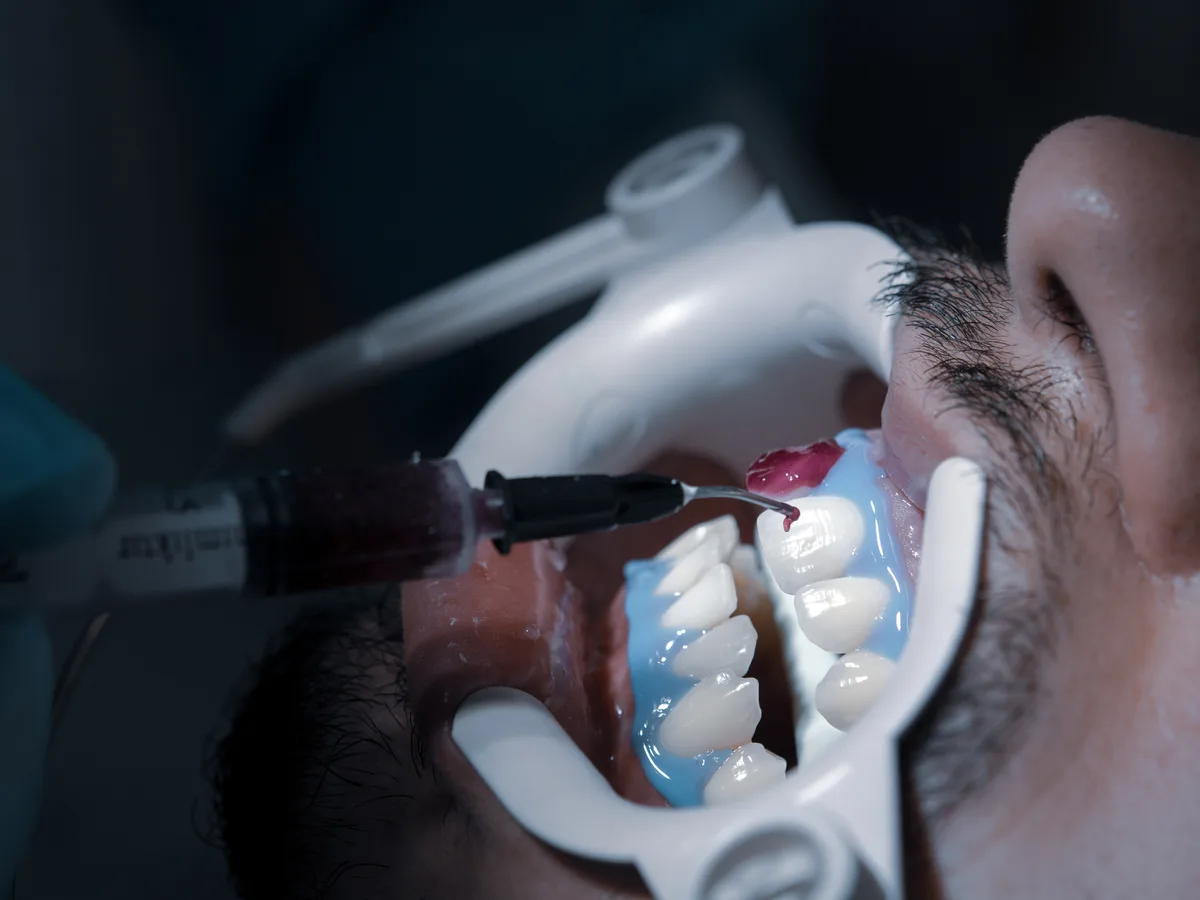
Contact between whitening gel and soft tissue can cause localised gum irritation — one of the more commonly reported teeth whitening side effects in patients using at-home trays without clinical fitting. This typically presents as redness or tenderness along the gum line, and in some cases a small white patch where the gel has sat directly on the tissue. The irritation usually resolves within one to two days without intervention.
The most effective way to prevent gum irritation is to ensure the gel is applied accurately and that custom-fitted trays are used for at-home whitening. If gum discomfort develops after treatment, rinsing with warm salt water can help soothe the affected area. Avoid spicy, acidic or very hot foods while the gum tissue is sensitive. If irritation does not resolve within a few days, or if discomfort worsens, your dentist should assess whether any tissue has been affected.
When to See Your Dentist
Most teeth whitening side effects resolve without clinical intervention. However, the following warrant a follow-up appointment:
- Sensitivity or pain that intensifies or has not resolved after seven days
- Visible white spots that have not faded after rehydration
- Blotchy colour that persists beyond ten days
- Gum irritation that is worsening rather than improving
- Any concern that feels unusual compared to what your dentist described at the time of treatment
At CityDent Istanbul, the whitening process is assessed on a patient-by-patient basis — enamel condition, existing restorations, and baseline shade are all taken into account before treatment is planned. Patients who have questions following whitening are welcome to book a follow-up assessment.
Book a ConsultationFrequently Asked Questions
Why do I have white spots on my teeth after whitening?
White spots visible after whitening are usually pre-existing areas of under-mineralised or structurally irregular enamel that become more noticeable once the surrounding tooth surface is lightened. They are not caused by the whitening treatment itself. In most cases they become less pronounced over the following days as the enamel rehydrates. If they remain visible, your dentist can advise on remineralisation or cosmetic correction options.
Are stained teeth after whitening permanent?
Surface staining that appears after whitening is not typically permanent. It usually results from pigment-rich foods or beverages consumed during the period when enamel pores are still open following treatment. These stains can generally be removed through professional polishing or addressed with a short maintenance whitening course.
How long does the blotchy appearance last after whitening?
In most cases, blotchiness or uneven tone settles within 24 to 72 hours as the teeth rehydrate. If uneven colouration has not improved after a week, it is worth discussing with your dentist to identify the underlying cause and whether follow-up treatment would help.
Can whitening cause permanent sensitivity?
When whitening is performed according to clinical guidelines and at appropriate intervals, permanent sensitivity is uncommon. Temporary sensitivity lasting a few days after treatment is a recognised and generally mild side effect. Persistent or worsening sensitivity may indicate an underlying enamel or dentine issue that should be examined by your dentist.
Can whitening gel hurt my gums?
Gel that comes into contact with soft tissue can cause temporary gum irritation. This is preventable through accurate application and the use of properly fitted whitening trays. If irritation occurs, it typically resolves within a day or two. Rinsing with warm salt water can ease discomfort during recovery.
Is teeth whitening sensitivity worse the second time?
Sensitivity response varies between patients and depends on the interval between treatments, the condition of the enamel, and the concentration of the whitening agent used. Allowing adequate time between whitening sessions and following your dentist's guidance on frequency typically helps manage sensitivity across repeated treatments.