Implant Crown Hygiene and Odor: Causes, Cleaning Guide
An implant crown that develops an odor or resists cleaning is often a sign that bacteria have found a foothold around the implant. Understanding implant crown hygiene and odor helps you act before a manageable issue becomes a clinical one.
This page covers the most common causes, practical cleaning techniques, and the signs that warrant a check-up.
Why Does an Implant Crown Develop an Odor?
Odor around an implant crown typically originates from bacterial activity — not from the crown material itself. Zirconia and titanium are inert; they do not produce smells. What accumulates around them does.
Implant crown hygiene and odor share a direct relationship: the better the cleaning routine around the crown, the less likely bacteria are to establish the colonies that cause persistent smells.
The most frequent sources of implant crown hygiene and odor problems fall into a predictable pattern: food debris trapped at the crown margin, gum tissue that has become inflamed, a screw or fit issue that has opened a small gap, or a hygiene routine that does not reach the spaces around the implant.
Identifying which cause is present determines the correct response. Some are resolved at home; others require a professional appointment. This implant crown hygiene and odor guide covers each category in turn.
Food Trapped Under Implant Crowns
Food impaction at the margin between crown and gum is the most common driver of implant crown hygiene and odor complaints. The junction is not as anatomically sealed as a natural tooth, which means particles can become lodged after meals and remain there until they are actively removed. Patients who experience bad breath around implant restorations often find this to be the starting point.
- A bad taste or odor that appears shortly after eating and does not resolve with rinsing
- Floss or an interdental brush consistently brings out debris from the same area
- Gum redness or mild bleeding after meals in the same spot
- Repeated food trapping at the same crown edge each day
- Brush gently along the crown margin after every meal using a soft-bristle brush
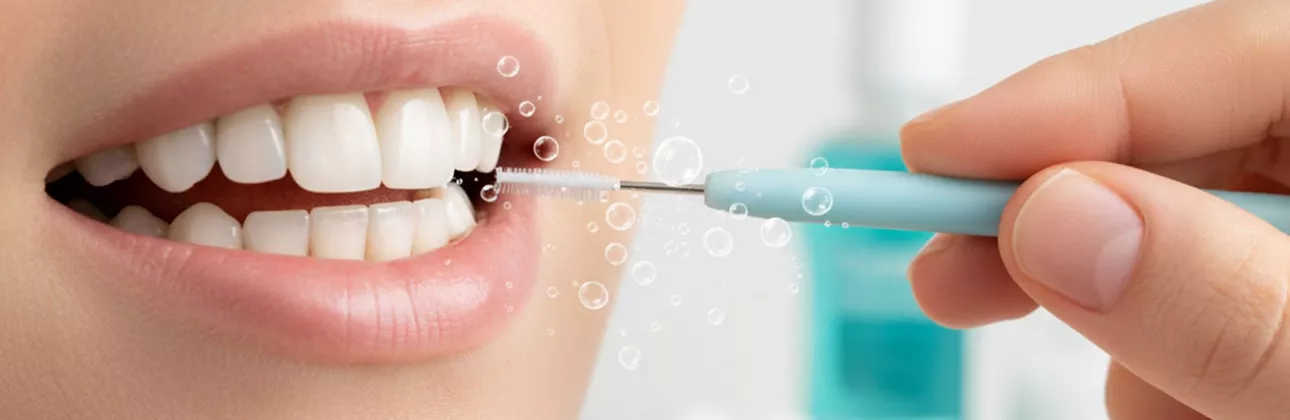
- Use an interdental brush sized to fit the space — do not force a brush that is too large
- Flush the margin with an oral irrigator; low pressure settings are sufficient and safer for peri-implant tissue
- Schedule professional cleaning every three to six months; home tools do not remove calcified deposits
Morning Breath and Implant Crowns
Overnight implant crown smell follows a consistent mechanism. Saliva flow reduces significantly during sleep, and bacteria that are normally diluted and swallowed during the day have several hours to multiply undisturbed. Crown margins and any shallow gum pocket around the implant become temporary reservoirs.
- Reduced overnight saliva flow allows bacterial load to increase
- Crown margins that are not cleaned before bed retain plaque through the night
- Dry mouth — whether from breathing through the mouth or dehydration — makes the environment more favourable for odour-producing bacteria
- Bad breath around implant crowns is often most pronounced in the morning because of this accumulation cycle
- Clean the implant thoroughly before bed: floss or super floss, followed by an interdental brush, followed by an oral irrigator
- Use an alcohol-free antiseptic rinse as a final step before sleeping
- Stay well hydrated through the day; avoid alcohol in the hours before bed
- A tongue scraper used daily reduces bacterial load on the tongue — a significant contributor to morning breath
Poor Crown Fit and Loose Screws
A crown that does not fit precisely — or a screw that has lost its torque over time — creates a mechanical gap. Bacteria and food accumulate in gaps that cannot be reached by any hygiene tool. The result is persistent implant crown hygiene and odor concerns that do not improve with better brushing, because the source is structurally inaccessible.
- The crown feels slightly loose or rocks when chewing
- Food consistently traps at the margin despite thorough hygiene
- A clicking or shifting sensation when biting
- Gum swelling or tenderness localised to the implant
- Do not attempt to re-seat or tighten the crown yourself
- Arrange a dental appointment to assess screw torque and crown seating — see implant crown problems Istanbul for the full overview
- Until the appointment, avoid hard foods on that side to reduce further movement
- Early correction prevents the gap from becoming a site of implant bite issues Istanbul
Cemented vs Screw-Retained Crowns and Odor Risk
Not all implant crowns are attached in the same way, and the attachment method affects long-term implant crown hygiene and odor management. Screw-retained crowns are secured by a screw that passes through the crown into the implant abutment; the access hole is sealed with composite. Cemented crowns use dental cement applied under the crown before seating.
Higher implant crown hygiene and odor risk. Excess cement that migrates below the gum line during placement is difficult to detect and impossible for the patient to remove. Residual subgingival cement is a documented driver of peri-implant inflammation and associated implant crown smell.
Preferred where retrievability and hygiene access matter. Avoids the cement extrusion risk entirely. Easier to remove for cleaning or repair. If you have a cemented crown, ask your dentist to probe for residual cement at your next appointment.
Gum Inflammation Around Implant Crowns
Gum inflammation around an implant — clinically referred to as peri-implantitis — is the most serious cause of implant crown odour. It involves bacterial infection of the tissue and bone surrounding the implant fixture. Unlike gingivitis around natural teeth, peri-implantitis can progress to bone loss with relatively little pain in its early stages, which means patients sometimes do not notice it until the problem is advanced.
Keeping implant crown clean Istanbul is not only about freshness — it is about protecting the bone that supports the implant. For patients considering their options, dental implants Istanbul treatment planning includes long-term maintenance guidance.
- Gums bleed or swell consistently around the implant, not only after hard brushing
- A persistent foul odour that does not improve with cleaning
- Gum recession that exposes part of the implant or abutment — see failed dental implant Istanbul for what to watch for
- In more advanced cases, pus discharge or a dull ache when chewing
- Professional debridement to remove bacterial deposits from around and below the crown margin — gum inflammation treatment Istanbul covers the clinical options in detail
- If the inflammation has spread, your dentist or periodontist will advise on the appropriate clinical approach — follow their guidance on any further treatment or prescription as advised by your treating dentist
- Regular monitoring appointments to track gum attachment levels
- Advanced peri-implantitis may require surgical intervention; early treatment almost always avoids this
Poor Oral Hygiene and Implant Crown Odor
Implant crowns do not decay, but the tissue around them is not immune to disease. A hygiene routine that is sufficient for natural teeth may be insufficient for dental implants Istanbul. Implants lack the periodontal ligament that gives natural teeth a degree of bacterial resistance; peri-implant tissue is anatomically different and, in some respects, more vulnerable.
Implant crown hygiene and odor concerns are among the most common reasons patients return for unscheduled appointments. In the majority of cases the root cause is a gap in the daily cleaning routine.
- Noticeable odor in the morning or after meals
- Visible calculus forming near the implant base
- Gum bleeding during brushing that has become a regular occurrence
- A film on the crown that persists despite brushing
- Brush twice daily with a soft brush; pay specific attention to the junction between crown and gum
- Use interdental brushes in every space adjacent to the implant — sizes may differ from those needed for natural teeth
- Follow with floss or super floss designed for implant use
- Use an oral irrigator daily; this is particularly effective for patients with multiple implants or implant-supported bridges
- Include an alcohol-free antiseptic rinse to reduce bacterial load
- Attend professional hygiene sessions as recommended by your dentist — this implant crown hygiene guide supplements but does not replace clinical maintenance
Patients who notice recurring implant crown hygiene and odor issues despite consistent brushing should book a clinical assessment rather than adjusting their home routine further. Persistent odor after adequate hygiene is a clinical finding, not a hygiene failure.
How to Clean Your Implant Crown Effectively
The following sequence covers the tools and order of use that provide the most thorough clean around an implant crown. Consistency matters more than any individual product choice. Knowing how to clean implant crown margins correctly is the most effective defence against implant crown hygiene and odor problems.
If you are already following this routine and odor persists, the cause is likely clinical rather than hygiene-related. An assessment for peri-implantitis or crown fit issues is the appropriate next step. Contact CityDent Istanbul to arrange a review.
Frequently Asked Questions
Can a loose screw cause bad odor around an implant crown?
Yes. A screw that has lost torque creates a micro-gap between the crown and the abutment. Bacteria and food debris accumulate in that gap and cannot be removed with hygiene tools. The result is persistent odor that does not improve with brushing. Screw tightening at a dental appointment resolves most cases quickly; the longer the gap remains, the greater the risk of peri-implant inflammation developing. For a broader overview of implant crown problems Istanbul, the dedicated page covers all common presentation types.
Do cemented implant crowns smell more than screw-retained ones?
They carry a higher risk, particularly if excess cement was left under the gum at the time of placement. Residual subgingival cement is a well-documented cause of peri-implant inflammation, which produces odor. Screw-retained crowns avoid this risk entirely and are also easier to retrieve for cleaning or repair. If you have a cemented crown, ask your dentist to probe for residual cement at your next appointment.
How do I clean under an implant crown?
The most effective combination is super floss — threaded under the crown using the stiffened end and moved in a C-shape — followed by an oral irrigator directed at the margin. Interdental brushes inserted from both sides of the crown add a further layer of coverage. Professional cleaning removes calcified deposits that home tools cannot reach.
Are water flossers effective for implant crown hygiene?
Yes, and they are particularly valuable for patients with multiple implants or implant-supported bridges where conventional flossing is difficult. Used daily, an oral irrigator reduces gum swelling and controls odour under implant crown accumulation. It works best as part of a full routine — brush, interdental brush, irrigator — rather than as a standalone replacement for flossing.
What type of interdental brush is best for implant crowns?
Choose brushes with plastic-coated wire cores. Metal wire cores in direct contact with the implant surface or abutment can cause micro-scratching, which provides a rougher surface for bacterial adhesion over time. Select a diameter that passes with light resistance; using the correct size for the actual space matters more than brand.
Can I use regular floss on an implant crown?
Standard floss can be used, but super floss or implant-specific floss is better suited. The thicker section of super floss cleans the wider margin around the abutment more effectively than a single strand. Thread gently from the cheek side and move in a C-shape rather than applying downward force. Consistent flossing, combined with professional keeping implant crown clean Istanbul maintenance, significantly reduces the risk of peri-implant gum disease. If you have a loose or falling dental crown Istanbul, address the fit issue before relying on flossing alone.