IMPLANT COMPONENTS
Dental Implant Abutment Istanbul
The abutment is the component that connects your dental implant to the visible crown — and its design, material, and fit determine much of what you see and feel in the long run. Understanding your dental implant abutment Istanbul options is one of the decisions that most directly shapes the stability, appearance, and longevity of your restoration.
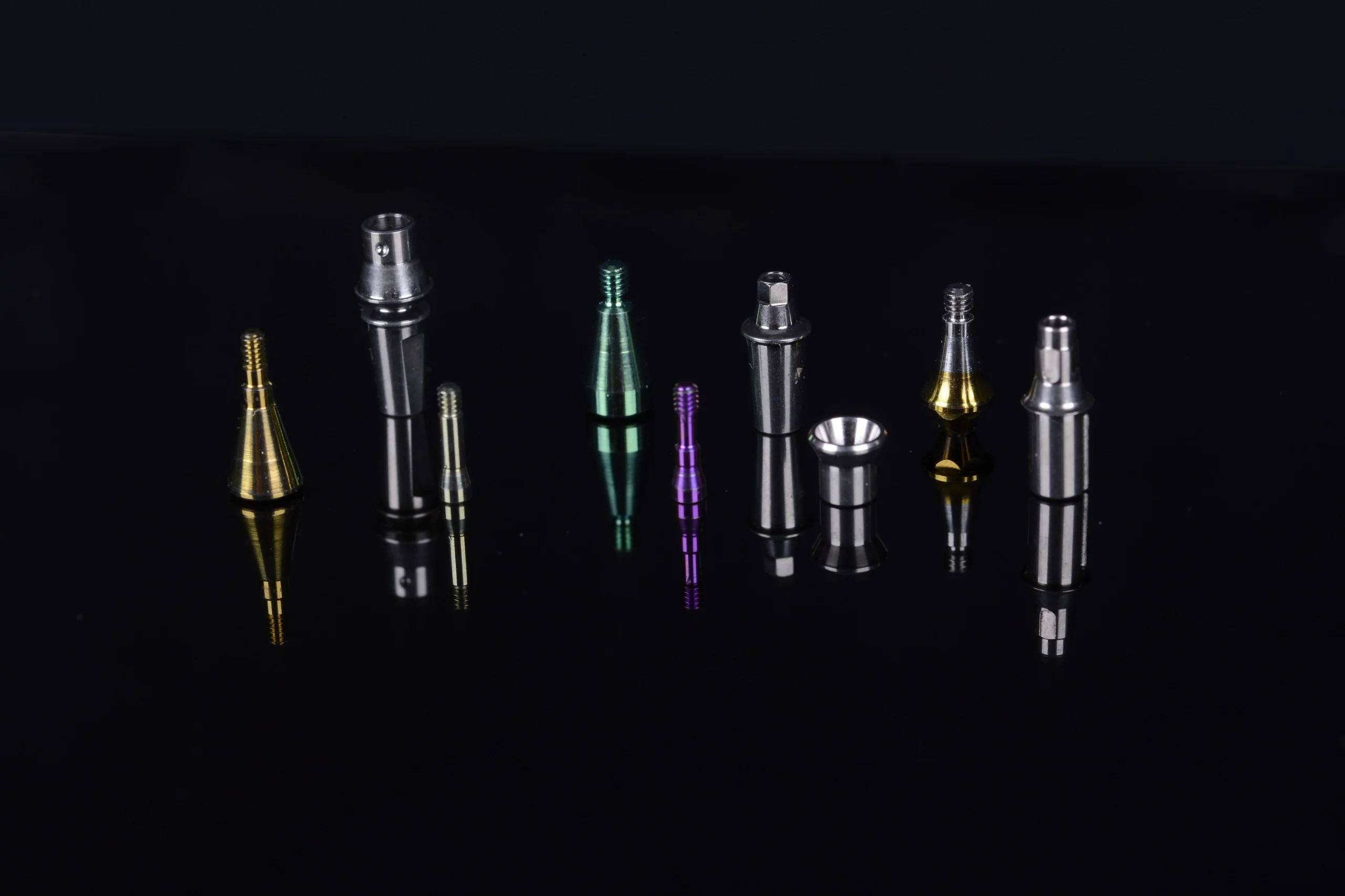
ANATOMY & FUNCTION
What Is a Dental Implant Abutment?
A dental abutment is the connector component placed between the implant body — embedded in the jawbone — and the visible prosthetic crown, bridge, or denture. Once the implant has integrated with the bone through a process called osseointegration, the abutment is secured on top and extends through the gum line to provide the foundation for the final restoration.
There are two broad categories: standard (prefabricated) abutments manufactured to general anatomical dimensions, and custom abutments designed digitally to match each patient's specific soft tissue contours and prosthetic requirements. At CityDent Istanbul, every implant abutment is selected following digital planning and tissue evaluation.
CLASSIFICATION
Types of Dental Implant Abutments
Implant abutment types are classified by material and by design function. Understanding these distinctions helps you ask the right questions at your consultation.
By Material
Titanium Abutments
Strong, biocompatible, and typically used in posterior regions where chewing forces are highest and gum tissue is thick enough that metal visibility is not a concern.
Zirconia Abutments
Tooth-coloured and metal-free. Preferred in front zones — particularly for patients with a thin gum biotype or high smile line — where a titanium substructure could create a grey shadow beneath the gum margin.
By Design and Function
- Standard (Prefabricated) Abutments Mass-produced components suitable for straightforward cases where soft tissue conditions and prosthetic alignment are predictable.
- Custom Abutments Digitally designed for each patient using CAD/CAM technology. They offer improved emergence profiles — the transition from implant to crown at the gum level — contributing to both aesthetics and long-term gum health. The implant crown abutment connection at this level is critical to achieving a natural-looking result.
- Multi-Unit Abutments Used in full-arch restorations such as All-on-4 and All-on-6 procedures. They support bridges and bars and allow for angulation correction when implants have been placed at a tilt relative to the prosthetic axis.
- Angled Abutments Used when the implant has been placed at an angle due to bone anatomy — typically to avoid anatomical structures while still achieving correct prosthetic alignment.
- Healing Abutments Temporary components placed immediately after implant surgery to protect the implant, guide the surrounding gum tissue into the correct shape, and prepare the site for the final restoration.
HEALING PHASE
The Healing Abutment — A Temporary but Critical Step
A healing abutment is placed on the implant after surgery, before the final prosthetic phase begins. Its function is threefold: it protects the internal connection of the implant from plaque and debris, it guides the gum tissue to form a natural emergence profile around the future crown, and it provides access for impressions and prosthetic procedures once healing is complete.
Healing abutments come in different heights and diameters to accommodate variations in gum tissue thickness and implant depth. Once the site has healed and the soft tissue has stabilised, the healing abutment is replaced with the definitive abutment and permanent restoration.
SELECTION CRITERIA
Abutment Sizes and Selection Criteria
Abutments are available in a range of heights, diameters, and angulations, with implant abutment types selected according to individual clinical requirements. The clinical selection is based on several factors:
- Gum Height (Soft Tissue Thickness) Determines the collar height required to achieve a correct emergence profile and maintain hygiene access.
- Implant Platform Diameter The abutment base must match the implant platform for proper mechanical fit and load distribution.
- Prosthetic Space and Aesthetics The height and shape are chosen to support the crown and aesthetic result without compromising structural strength or hygiene.
- Angulation Needs Where implants have been placed at an angle, angled abutments with specific degree corrections may be used to achieve correct prosthetic alignment.
Digital planning tools and intraoral scans allow the dental team at CityDent to select or design the implant abutment that best matches your anatomy and long-term treatment goals.
COMPATIBILITY
Should the Abutment Brand Match the Implant Brand?
In general, yes. Abutments and implants from the same manufacturer are engineered to work together with precise tolerances, which minimises the risk of microgaps at the implant-abutment connection. Microgaps can harbour bacteria and may contribute to bone resorption and soft tissue inflammation over time.
Using a third-party implant abutment may also void the implant manufacturer's warranty and can introduce biomechanical uncertainty if the components were not tested together. In select cases, well-documented aftermarket abutment systems with demonstrated compatibility are used — but only when clinically indicated, not as a cost-reduction measure.
- Precision Fit Matched components are engineered to the same tolerances, reducing the risk of mechanical failure and microbial entry at the connection.
- Warranty & Support Implant manufacturers typically require the use of their own abutment components for the warranty to remain valid.
- Biomechanical Safety Mismatched components may compromise load distribution and long-term success, particularly under high occlusal forces.
- Prosthetic Compatibility Matching systems ensure full compatibility with the prosthetic tools and scan bodies used during the restoration phase.
CITYDENT ISTANBUL
Implant Abutment Istanbul — How We Plan Yours
At CityDent Istanbul, abutment selection is part of the treatment planning process from the outset — not an afterthought. We use 3D CBCT imaging and digital scanning to evaluate soft tissue thickness, bone volume, and prosthetic space before committing to an abutment type or size. Patients seeking dental implant abutment Istanbul treatment can expect this level of planning at every stage.
We work primarily with original abutments from the same brand as the implant system, ensuring full mechanical compatibility. For aesthetically demanding cases — particularly in the front zone or where gum biotype is thin — we produce custom abutment Istanbul solutions using in-house CAD/CAM technology, tailored to each patient's tissue contours and crown design.
If you are planning implant treatment in Istanbul and want to understand your implant abutment options before committing to a plan, we welcome a no-obligation consultation. You can also review our screw-retained prosthesis page for related information on final restoration options.
QUESTIONS
Frequently Asked Questions
Is the cost of the abutment included in the implant price?
In Turkey, most clinics offer all-inclusive implant packages that cover the implant body, abutment, and crown as a single quoted price. In many European countries, these components are billed separately, and the abutment — particularly if custom-made — may represent a significant additional item. Patients comparing treatment options internationally should clarify what is included in any quoted figure before making a decision.
What is the difference between an implant and an abutment?
A dental implant is a titanium or zirconia post surgically placed into the jawbone, functioning as an artificial tooth root. An abutment is the connector secured on top of the implant, extending through the gum line to support the visible restoration — a crown, bridge, or denture. The implant is embedded and invisible; the abutment links it to your smile.
How long does an abutment last?
When selected and placed correctly, an abutment typically lasts 10 to 20 years or more. Longevity is influenced by oral hygiene, bite load, gum health, and material quality. Regular check-ups and maintenance can further extend the lifespan of the abutment and the overall restoration.
Can I choose my abutment type?
Yes. Your dentist will assess your clinical situation — gum thickness, esthetic needs, implant platform, and bite load — and present the most suitable options. Custom abutments may be recommended for improved aesthetics; standard abutments may be appropriate for straightforward cases. Patient preference is taken into account throughout the planning process.
Is placing the abutment painful?
Abutment placement is a brief procedure carried out under local anaesthesia. Most patients experience minimal discomfort during the appointment. Some mild sensitivity or swelling may occur in the day or two that follow; your dentist will advise you on how to manage this comfortably.
Is the abutment used during the temporary crown phase the same as the one used for the permanent crown?
Usually not. During the provisional phase, a temporary abutment or healing cap is used to shape the gum and protect the implant. For the final restoration, a definitive abutment — often custom-designed — is placed to support the permanent crown with the precision and strength required for long-term function.
Why does an abutment become loose?
An abutment can become loose due to insufficient tightening torque, excessive bite forces, or component mismatch. Bruxism (teeth grinding), poor prosthetic design, or bone loss around the implant can contribute to mobility over time. A loose abutment should be assessed promptly to prevent damage to the implant connection.
What happens if the abutment feels loose or moves?
This is a clinical sign that requires timely dental assessment. A loose abutment left unaddressed can compromise the implant connection, allow bacterial entry, and lead to inflammation or implant failure. In most cases, the issue can be resolved by retightening or replacing the abutment screw. The site is also evaluated for signs of infection or prosthetic instability.