IMPLANT AFTERCARE
Failed Dental Implant
A failed dental implant raises immediate questions about what went wrong, whether anything can be done, and what happens next. This page explains the signs, causes and options — clearly.
At Citydent Istanbul, we assess and treat failed implants placed both at our clinic and elsewhere. Reaching us by WhatsApp, phone or email is the quickest way to get clear guidance.
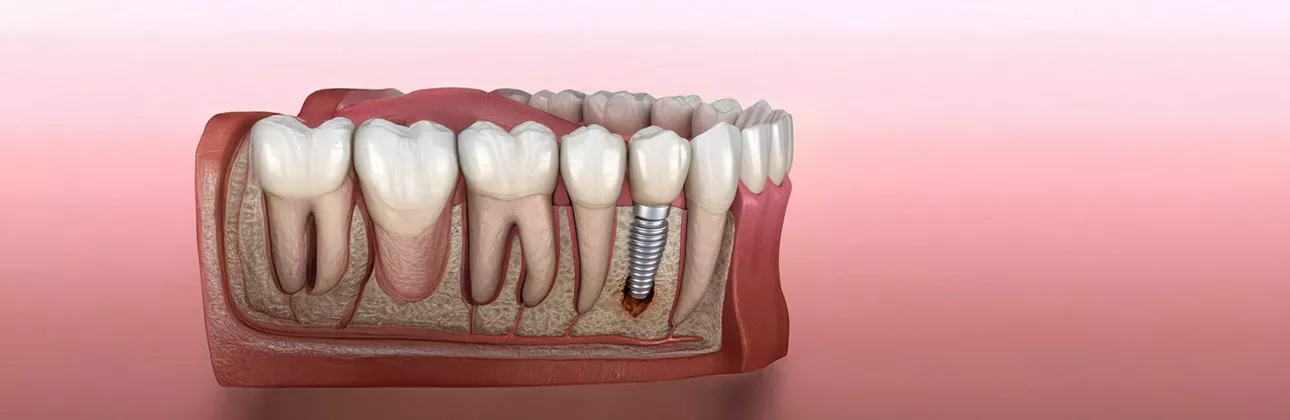
WARNING SIGNS
Signs and Symptoms of a Failed Dental Implant
Recognising the signs of a failed dental implant early gives you more options. The following are the most frequently reported symptoms of dental implant failure.
- Persistent pain or discomfortPain that worsens or continues beyond the normal healing phase may indicate a problem with osseointegration. It can radiate to adjacent areas and affect eating or speaking.
- Swelling, redness or inflammationLocalised gum swelling and redness are common early indicators of peri-implantitis, a leading biological cause of failed dental implants.
- Implant mobilityAny detectable movement of the implant itself is a serious sign. A failed dental implant that moves typically points to incomplete bone integration or progressive bone loss. This is distinct from an implant falling out, which indicates complete loss of osseointegration.
- Difficulty chewing or bitingDiscomfort during biting often reflects implant instability. Many patients unconsciously begin favouring the opposite side of the mouth.
- Receding gumsGum recession can expose the implant threads, increasing infection risk and affecting the aesthetic result. See our page on gum recession after dental implants for more detail.
- Pus or persistent bad tasteDischarge or an ongoing unpleasant taste around the implant site is a sign of active infection and warrants prompt clinical evaluation.
- Bone loss on imagingRadiographic evidence of bone resorption around the implant is a structural indicator of a failed dental implant, even when symptoms are mild or absent.
For a broader overview of complications that can follow implant surgery, our post-implant problems guide covers the full range.
DIAGNOSIS
Is It the Implant or Just the Crown?
Not all movement or discomfort in the implant area indicates that the implant fixture itself has failed. In many cases, the issue lies with the abutment or crown — the components that sit above the implant.
A loose crown may result from worn cement, minor trauma, or an imprecise fit, and can often be reattached or replaced without involving the implant fixture itself. A loose abutment may occur due to mechanical stress or insufficient torque during placement; the screw can usually be retightened or replaced by your dentist without removing the implant.
A truly loose implant fixture indicates a breakdown in osseointegration — the biological bond between the implant and the surrounding bone. This is distinct from a case where the implant is not integrating at all during the early healing phase, which typically manifests as persistent pain and early mobility rather than late loosening. Both situations require clinical and radiographic assessment before any treatment decision is made.
If you are unsure whether the looseness you feel is in the implant or the crown, contact your dentist as soon as possible. Early diagnosis determines the range of options available.
CAUSES
Why Do Dental Implants Fail?
Dental implant failure can be classified as early or late, depending on when it occurs relative to the placement procedure.
Early Failure Causes
- Poor osseointegrationWhen bone fails to form a stable bond with the implant surface — meaning the implant is not integrating as expected — the fixture remains mobile. This may result from insufficient bone density, micro-movement during healing, or surgical technique, and typically becomes apparent within weeks of placement.
- Peri-implantitisBacterial accumulation at the gum line leads to inflammation and progressive bone loss. If left unmanaged, peri-implantitis is one of the leading causes of implant failure symptoms and eventual implant loss.
- OverloadingPlacing a crown before osseointegration is complete, or exposing the implant to excessive biting forces through bruxism or misaligned occlusion, can disrupt the healing process and compromise integration.
- Insufficient bone volumeWithout adequate bone density or width, the implant lacks the structural support it requires. This may not be apparent until a failed dental implant becomes mobile. Bone grafting may be indicated before re-implantation is considered.
Late Failure Causes
- Systemic health conditionsUncontrolled diabetes and certain autoimmune conditions can impair bone regeneration and tissue healing, increasing the likelihood of late-stage implant rejection signs. See our page on implants and diabetes risk.
- SmokingResearch consistently links smoking to elevated implant failure rates. Nicotine restricts blood supply to the healing tissues, and studies indicate that smokers face a substantially higher risk of early failed dental implant outcomes — particularly in the upper jaw. See our page on smoking and implant failure risk.
- Material sensitivitySensitivity to titanium or implant alloys is uncommon but documented. In susceptible patients it can produce a chronic inflammatory response that prevents stable integration.
- Surgical factorsIncorrect implant positioning, excessive heat generated during drilling, or compromised sterility can damage bone tissue at the time of placement and predispose the implant to early failure.
TREATMENT OPTIONS
Can a Failed Dental Implant Be Saved?
In a number of cases, a failing implant can be stabilised — particularly when dental implant failure is identified before significant bone loss has occurred.
Where the issue is peri-implant mucositis or early-stage peri-implantitis without structural bone loss, non-surgical approaches including thorough debridement, antiseptic irrigation, and improved home care protocols can restore tissue health and stabilise the implant. Research on peri-implant self-care supports the value of consistent oral hygiene in maintaining long-term implant stability.
Where infection has progressed but bone loss remains limited, surgical cleaning of the implant surface combined with appropriate local treatment may preserve the fixture. If the implant shows only partial mobility and residual integration, temporary splinting or occlusal adjustment may allow the surrounding bone time to consolidate.
However, if imaging shows advanced bone loss or the implant is completely mobile, removal is typically indicated. Delaying removal risks further bone destruction and makes subsequent re-implantation more complex.
Not all failed dental implants need to be removed immediately, but the clinical assessment of a dental implant specialist is essential to determine which course of action is appropriate. If you are experiencing pain or movement around an existing implant, contacting our implant clinic Istanbul team is the recommended first step.
PROCEDURE
How Is a Failed Dental Implant Removed?
When removal is indicated, the procedure is carried out under local anaesthesia and is typically straightforward, particularly if the failed dental implant has not fully integrated.
- AssessmentThe area is evaluated clinically and radiographically before the procedure begins to confirm the extent of bone loss and plan the approach.
- RemovalDepending on the degree of integration, the implant may be unscrewed using a reverse-torque instrument or removed with specialised surgical tools where more force is required.
- DebridementAny infected or unhealthy tissue around the implant site is carefully removed during the same procedure to prepare the site for healing.
- Bone grafting (if needed)If bone has been lost, a bone graft is often placed at the time of removal or in a subsequent procedure to preserve the ridge and prepare the site for a potential replacement implant.
- Healing and re-evaluationThe site is monitored through a healing period before further implant placement is considered. The timeline varies depending on the extent of bone loss and the patient's overall healing capacity.
COMMON QUESTIONS
Frequently Asked Questions
Can a loose dental implant be fixed?
It depends on what is loose. If the looseness is in the crown or abutment, the implant fixture itself may be unaffected and the issue can often be resolved without removing the implant. If the implant fixture itself is mobile — a hallmark of a failed dental implant — it typically needs to be removed and the site assessed before any further treatment.
What happens if a failed implant is not removed?
Leaving a failed dental implant in place can allow infection to spread and leads to progressive bone loss in the surrounding area. This makes subsequent re-implantation more difficult and reduces the available bone for a replacement fixture.
How long does it take before a new implant can be placed after failure?
In most cases, a waiting period of several months is needed to allow the extraction site to heal and, where required, for a bone graft to consolidate. The exact timeline depends on the extent of bone loss and individual healing.
Is a failed dental implant painful?
Pain is common, particularly when infection or bone loss is involved. Some patients experience significant discomfort; others notice mainly mobility or a change in bite. Symptoms vary depending on the cause and stage of failure.
How common is dental implant failure?
Long-term studies indicate that dental implants have high survival rates over ten years and beyond when placed correctly and maintained appropriately. Failure, while uncommon, does occur and is more likely in patients with uncontrolled systemic conditions, smokers, or cases where insufficient bone was available at the time of placement.
Who should I contact if I think my implant has failed?
Contact your treating dentist as soon as possible. If you had your implant placed at another clinic, our dental clinic in Istanbul can assess your situation and advise on the available options.