Monolithic Zirconia Crown Istanbul
A single-block, metal-free crown milled from solid zirconia — engineered for maximum durability on back teeth, bruxism cases, and implant-supported restorations. Designed and fabricated in CityDent's in-house Istanbul laboratory.
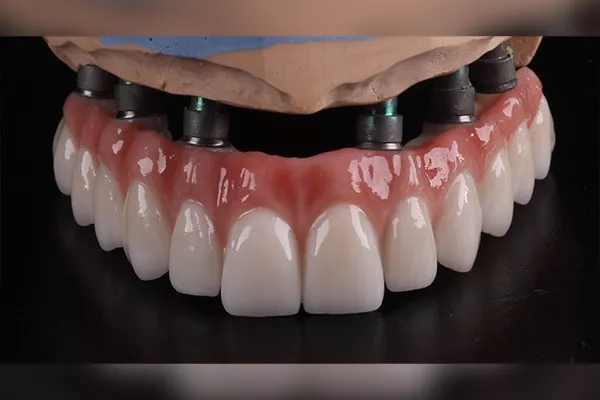
What Is a Monolithic Zirconia Crown?
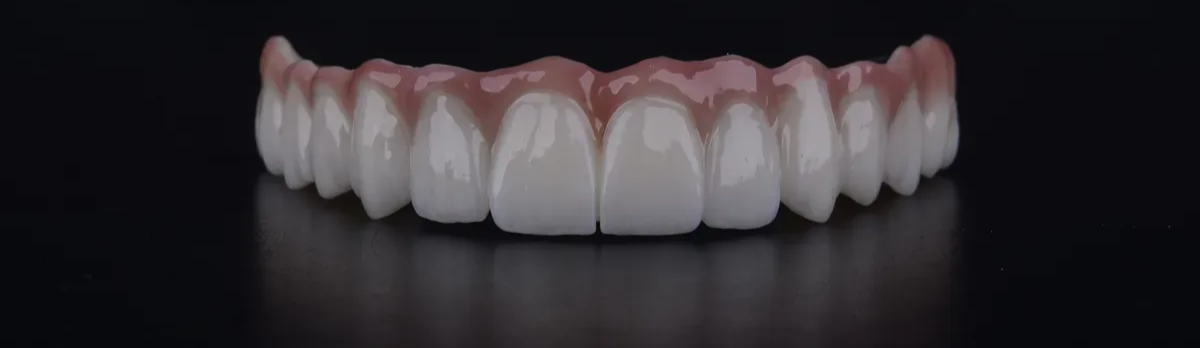
A monolithic zirconia crown Istanbul is carved from a single solid zirconium oxide block — no porcelain veneer layer on top, no risk of chipping or delamination between layers.
Zirconia crowns exist in two main forms: veneered (layered) and monolithic. A veneered zirconia crown has a zirconia inner core with a hand-applied porcelain surface — beautiful, but prone to chipping of the outer ceramic over time. A monolithic zirconia crown Istanbul, by contrast, is uniform throughout: the full contour zirconia Istanbul design means the biting surface, margins, and sides are all one continuous, unbroken material.
This eliminates the most common failure mode in ceramic crowns — the fracture or delamination of the veneering porcelain. According to a 2025 systematic review and meta-analysis by Pjetursson et al., the five-year survival rate for monolithic zirconia crowns sits at approximately 96.8%, comparable to metal-ceramic restorations and with a significantly lower rate of veneer fracture complications.
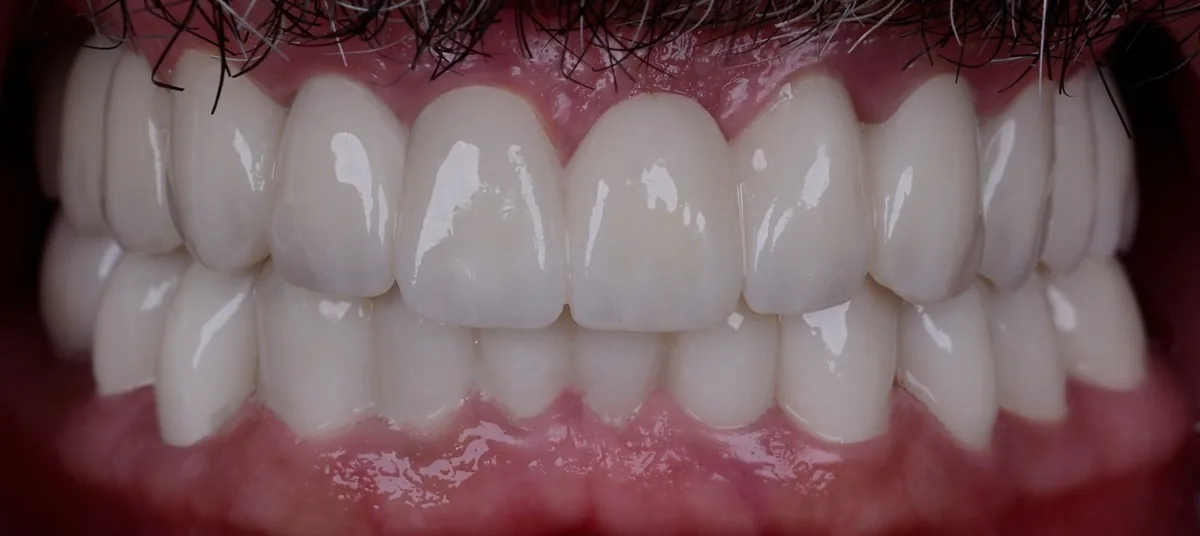
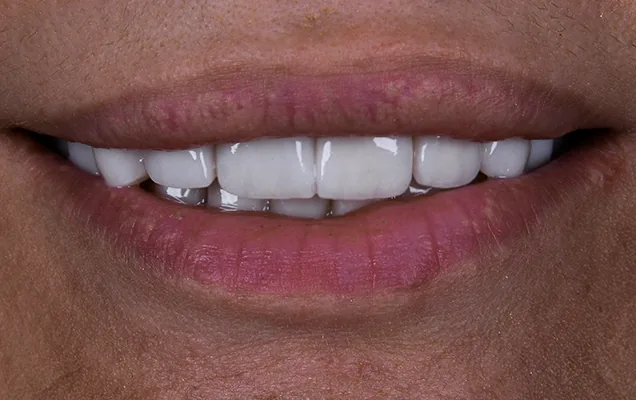
The result is a zirconia crown no metal Istanbul option that combines clinical strength with excellent aesthetics. Modern high-translucency monolithic zirconia grades — combined with precise surface staining and glazing techniques — produce results that closely mimic natural enamel, making them viable for both posterior and anterior positions.
How Is a Monolithic Zirconia Crown Made in Istanbul?
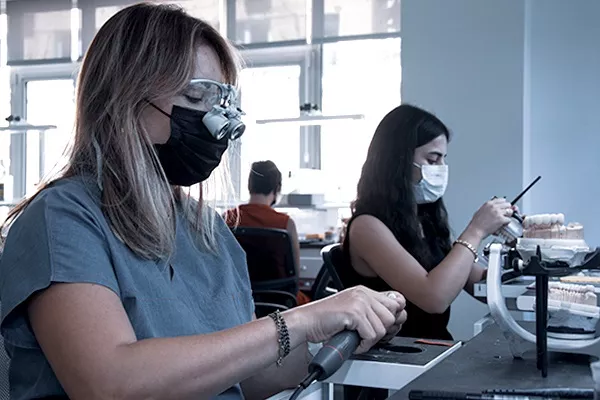
Every monolithic zirconia crown Istanbul produced at CityDent follows a fully digital workflow. Because design, milling, and finishing all take place in our in-house laboratory, turnaround is fast and adjustments are handled without sending work to an external facility.
- Digital impression An intraoral scanner captures precise measurements of the prepared tooth — no traditional putty required.
- CAD design Our dental technicians model the crown geometry in CAD software, accounting for occlusal contacts, margins, and shade.
- CAM milling The digital model drives a milling unit that cuts the full contour zirconia crown from a solid zirconia disc.
- Sintering The milled crown is fired in a sintering furnace at high temperature, crystallising the material to its final hardness and density.
- Colouring and glazing Surface stains are applied before glaze firing to approximate the patient's natural tooth shade.
- Fit and bonding The crown is tried in for fit, bite, and aesthetics before permanent cementation or implant screw placement.
Monolithic vs Layered Zirconia: Which Is Right for You?
Choosing between a monolithic zirconia crown Istanbul and a layered design depends primarily on tooth position, bite forces, and aesthetic requirements.
| Factor | Monolithic Zirconia | Layered Zirconia |
|---|---|---|
| Fracture resistance | Very high — no veneer to chip | Moderate — veneer fracture risk |
| Translucency | High in modern HT/UHT grades — current translucency levels closely approach layered ceramics | Higher — closer to enamel |
| Best position | Molars, premolars, implants | Anterior (front) teeth |
| Bruxism cases | Preferred — lower failure risk | Higher risk of veneer fracture |
| Full arch cases | Commonly used for posterior segments | Anterior segments |
A 2022 meta-analysis (PMID: 34615842) found that bruxism cases show a measurable increase in crown failure risk overall — but monolithic designs outperform veneered alternatives in these scenarios, making a solid zirconia crown Istanbul the first-line choice for patients with significant grinding habits.
For aesthetic cases, the choice between monolithic and layered zirconia comes down to individual tooth position and shade complexity — not a question of one material looking better than the other. High-translucency monolithic zirconia and multilayer zirconia Istanbul today achieve comparable visual results in most clinical situations. Your dentist will confirm which grade suits your specific case.
Who Is a Candidate for a Monolithic Zirconia Crown Istanbul?
A monolithic zirconia crown Istanbul is typically recommended in the following clinical situations.
- Back tooth damage Molars and premolars experience the highest occlusal loads. A durable dental crown Istanbul made from solid zirconia is the standard material choice for these posterior positions.
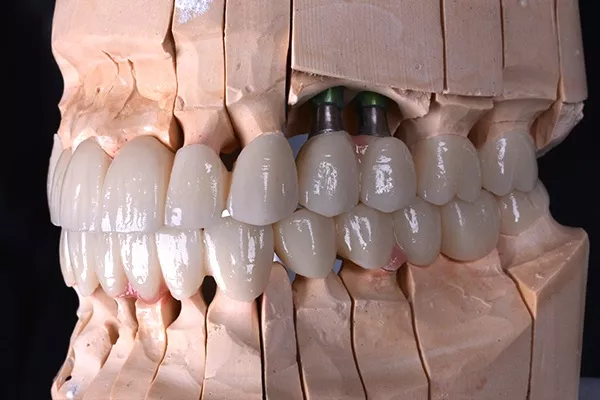
- Implant patients Monolithic zirconia is widely used as the final restoration on dental implants Istanbul Turkey. Its strength and predictable fit suit both cement-retained and screw-retained configurations.
- Bruxism (grinding) patients Those who clench or grind benefit significantly from the fracture resistance of a monolithic zirconia crown over veneered alternatives. A night guard is also advisable, as advised by your dentist.
- Full arch restorations For full mouth implants Turkey, monolithic zirconia is commonly selected for posterior segments due to its strength-to-longevity ratio.
- Metal-sensitive patients As a zirconia crown no metal Istanbul option, monolithic zirconia is entirely biocompatible — carrying minimal biocompatibility concerns with no metal ion release.
Material selection — including zirconia grade and surface treatment — is finalised based on your individual clinical assessment at CityDent Istanbul. Modern monolithic zirconia grades cover a wide range of aesthetic demands, from high-strength posterior units to translucent anterior restorations.
Advantages and Key Considerations for Monolithic Zirconia
Modern monolithic zirconia — particularly in high-translucency and ultra-high-translucency grades — delivers both exceptional strength and highly aesthetic results. The overview below covers the full picture so patients can make an informed decision together with their dentist at CityDent Istanbul.
Advantages
- No chipping risk — single-block structure eliminates the veneer fracture seen in layered crowns, the most common ceramic restoration failure mode
- High fracture resistance — suitable for back teeth, bruxism patients, and implant cases where bite forces are greatest
- Fully metal-free — biocompatible material with no metal alloy, suitable for patients with sensitivities
- Thinner preparation possible — requires less tooth reduction than some alternatives because the material does not need a separate porcelain layer
- CAD/CAM precision — digital milling produces consistent marginal fit with minimal manual error
- Lower long-term maintenance — no risk of veneer delamination means fewer re-treatment appointments over the crown's lifespan
Considerations
- Shade selection is permanent — the colour is determined before milling and cannot be altered after sintering; for patients who plan to whiten their natural teeth, whitening should be completed first so the crown can be matched to the new shade
- Translucency varies by grade — standard monolithic zirconia is denser than layered ceramic, but high-translucency (HT) and ultra-high-translucency (UHT) grades now achieve light transmission very close to natural enamel — making aesthetic anterior restorations fully achievable
- Polishing matters — unglazed zirconia surfaces can create friction against opposing teeth; at CityDent all monolithic crowns receive a full glaze and occlusal polish to prevent this
- Case-by-case shade assessment — for complex multi-unit anterior cases with demanding shade gradients, your dentist will evaluate which zirconia grade — or whether a combination with layered ceramic — gives the most predictable aesthetic result
How Long Does the Procedure Take in Istanbul?
One of the most common questions from international patients is how many days they need to allocate for a monolithic zirconia crown Istanbul procedure. Because CityDent operates an in-house digital laboratory, the timeline is significantly shorter than clinics that outsource fabrication.
- Day 1 — Consultation and records Digital X-rays, intraoral photographs, and a preliminary scan are taken. If preparatory work (filling, root canal, gum treatment) is needed, this is planned at the same session. For straightforward single-crown cases with a healthy tooth, preparation may also begin on Day 1.
- Day 1–2 — Tooth preparation and digital impression The tooth is shaped under local anaesthesia to the required crown dimensions. An intraoral scan replaces traditional putty impressions. A temporary composite crown is placed while the final restoration is fabricated.
- Day 2–3 — Milling, sintering, glazing The monolithic zirconia crown Istanbul is milled from a solid zirconia disc, sintered to final hardness, shade-stained if required, and polished. With in-house milling this typically takes 24–48 hours.
- Day 3–4 — Try-in, adjustment, cementation The crown is seated for fit and bite assessment. Any minor occlusal adjustments are made chairside. The crown is permanently bonded or screw-retained. A brief final check confirms comfort and aesthetics.
For most single-crown cases, the entire monolithic zirconia crown Istanbul process from first appointment to final cementation takes 3 to 4 days. Full arch or multi-unit restorations require additional planning time. Your dentist will confirm the expected schedule after the initial consultation. For patients travelling for monolithic zirconia Turkey treatment, this compact timeline makes Istanbul a practical destination for high-quality restorations.

Monolithic Zirconia Crown Aftercare
A monolithic zirconia crown Istanbul requires no special maintenance beyond standard oral hygiene, but there are several considerations that help maximise longevity. Caring correctly for your monolithic zirconia crown Istanbul from day one extends its functional life.
- First 24–48 hours after cementation Avoid very hard or sticky foods while the cement fully sets. Mild sensitivity or pressure awareness around the crowned tooth is normal and typically resolves within a few days as tissues adapt.
- Daily brushing and flossing Brush twice daily with a soft-bristle toothbrush. Floss or use an interdental brush daily at the crown margin — this is where plaque accumulation and gum inflammation are most likely to develop. The crown surface itself does not decay, but the underlying tooth structure and gum tissue still require regular care.
- Bruxism patients — night guard If you clench or grind, wearing a night guard as advised by your dentist protects both the crown and the opposing teeth. Monolithic zirconia is fracture-resistant, but sustained grinding forces over time can stress the crown-root junction and cement bond.
- Avoid biting hard objects Zirconia is strong under normal chewing forces but is not indestructible. Avoid using the crowned tooth to crack nuts, open packaging, or bite nails.
- Routine check-ups Schedule a professional review every 6–12 months. Your dentist will check the crown margin, cement seal, bite contacts, and gum health around the restoration. Catching minor issues early prevents more complex treatment later. For most patients, a monolithic zirconia crown Istanbul maintained with standard hygiene and regular reviews performs reliably for many years.
- Returning patients and remote follow-up International patients who return home after treatment can send photographs and describe any concerns via WhatsApp or email. For significant issues — such as the crown feeling loose or a noticeable change in bite — schedule an appointment with a local dentist and contact CityDent Istanbul for guidance.
What to Expect at CityDent Istanbul
CityDent Istanbul operates an in-house digital laboratory, meaning the design, milling, and finishing of your monolithic zirconia crown Istanbul happen at the same address as your clinical appointments. This direct integration between the dentist and dental technician reduces waiting time and allows real-time adjustments.
For patients combining multiple restorations — such as a fixed zirconia prosthesis Istanbul covering several teeth — the same digital workflow is scaled to the number of units involved.
- Consultation and digital records Photographs, X-rays, and a digital intraoral scan are taken to plan the restoration and confirm material selection.
- Tooth preparation The tooth is shaped under local anaesthesia to create the necessary space for the crown dimensions.
- Digital impression and design The scan feeds directly into the CAD design station — no traditional impressions required.
- Milling, try-in, sintering The monolithic zirconia crown is milled, tried in for fit and shade, then sintered and glazed.
- Cementation or screw retention The crown is permanently bonded or screw-retained depending on whether it is tooth-supported or implant-supported.
All clinical procedures at CityDent Istanbul are performed under our dental care clinic Istanbul infection control and sterilisation protocols. For further information or to arrange a free consultation, use the contact form or WhatsApp link.
Sources Reviewed
- Pjetursson BE et al. Systematic Review & Meta-Analysis: Survival of Metal-Ceramic, Veneered and Monolithic All-Ceramic Crowns. Clinical Oral Implants Research / PubMed, 2025. PMID: 41489982
- Pjetursson BE et al. Survival and Complication Rates of Zirconia-Ceramic vs Metal-Ceramic Implant-Supported Single Crowns. Clinical Oral Implants Research, 2018. PMID: 30328190
- Clinical Performance of Monolithic CAD/CAM Tooth-Supported Zirconia Restorations: Systematic Review & Meta-Analysis. Journal of Prosthodontics / PubMed, 2022. PMID: 34615842
Common Questions About Monolithic Zirconia Crown Istanbul
Is monolithic zirconia better than veneered zirconia?
For back teeth and high-bite-force situations, a monolithic zirconia crown Istanbul generally offers better fracture resistance because there is no porcelain overlay that can chip. For highly visible front teeth where translucency matters most, layered or multilayer zirconia may be preferred. Your dentist will recommend the appropriate material based on tooth position, bite, and aesthetic goals.
How long does a monolithic zirconia crown last?
Clinical data indicates high five-year survival rates comparable to metal-ceramic restorations. Long-term outcomes depend on bite forces, oral hygiene, and regular maintenance. Bruxism is a recognised risk factor for all crown types, and a night guard is typically advisable for grinding patients — as advised by your dentist.
Is monolithic zirconia suitable for front teeth?
Yes — and increasingly so. Modern high-translucency monolithic zirconia grades are routinely used for anterior restorations, including central incisors, with excellent aesthetic outcomes. Advanced surface staining and glazing techniques allow dental technicians to replicate the colour gradients and light behaviour of natural enamel. For complex shade cases or extreme translucency demands, your dentist at CityDent may discuss which specific monolithic grade — or a combination approach — delivers the most predictable result for your case.
Can monolithic zirconia be used on implants?
Yes. A monolithic zirconia crown Istanbul is a well-established option for implant-supported restorations. Its strength and biocompatibility make it suitable for both single-unit crowns and multi-unit fixed prostheses, in cement-retained and screw-retained configurations.
Does a monolithic zirconia crown require special care?
No special maintenance is needed beyond standard oral hygiene — twice-daily brushing and daily flossing or interdental cleaning. Patients with bruxism should use a night guard as advised by their dentist to protect the restoration long-term. Routine check-ups allow early identification of any wear or fit changes.
Is getting a monolithic zirconia crown Istanbul painful?
The tooth preparation stage is performed under local anaesthesia, so you should not feel pain during the procedure. Some patients experience mild sensitivity or tenderness around the prepared tooth and gum line in the first day or two after preparation — this is normal and generally settles without intervention. After final cementation, a brief period of bite awareness is common while you adjust to the new crown. If discomfort persists beyond a week or worsens, contact your dentist for a bite check.
How many visits are needed for a monolithic zirconia crown in Istanbul?
For most single-crown cases at CityDent Istanbul, a monolithic zirconia crown Istanbul requires 2 to 3 clinical appointments spread over 3 to 4 days. The first appointment covers consultation, records, and tooth preparation. The second covers the try-in and final cementation once the crown is milled and sintered. If preparatory treatment is needed — such as a filling or root canal — additional appointments are required before crown preparation begins.
Can a monolithic zirconia crown break or chip?
Because monolithic zirconia has no separate porcelain veneer layer, it does not chip in the same way as veneered crowns. However, like any dental restoration, it can fracture under extreme impact or sustained excessive force. Clinical research indicates that monolithic zirconia has lower fracture rates than veneered zirconia alternatives, particularly in posterior positions. For bruxism patients, a night guard and regular bite checks help protect the restoration from unnecessary stress.
What happens if the crown does not fit correctly after placement?
Minor bite discrepancies after cementation are common and are corrected chairside with a brief occlusal adjustment — this typically takes a few minutes. If fit concerns arise after you have returned home, contact CityDent Istanbul with a description of the issue. In most cases, a local dentist can perform minor occlusal adjustments. For more significant fit problems, your dentist will advise on the appropriate next step, which may include remaking the crown.
Is the colour of a monolithic zirconia crown permanent?
Yes. The shade of a monolithic zirconia crown Istanbul is determined before milling and is permanent once sintered. The crown will not respond to whitening treatments. If you are considering whitening your natural teeth, it is advisable to complete whitening first and then select your crown shade to match the new tooth colour. Your dentist at CityDent will guide you through shade selection as part of the treatment planning process.