Bone Graft and Membrane in Implant Surgery – Citydent Istanbul
At Citydent Istanbul, bone graft and membrane procedures are performed whenever the jaw requires additional support before or during implant placement. Each case is assessed individually, and internationally certified graft and membrane materials are used throughout.
Treatment plans are presented in writing before any procedure begins.
What Is a Bone Graft in Implant Surgery?
Bone graft and membrane implant Istanbul treatment begins with understanding why jaw bone support matters. When a tooth is lost, the jawbone beneath it gradually loses density. Over time, this bone loss can make it difficult to place a dental implant securely. A bone graft addresses this directly by introducing material into the deficient area to stimulate and support new bone growth, creating a stable foundation for the implant.
At Citydent Istanbul, bone graft and membrane procedures are planned using digital X-rays or 3D cone beam imaging, which provides a precise picture of bone height, width, and density before any treatment begins. Each case is assessed individually and internationally certified materials are used throughout.
Think of bone grafting as structural preparation. The implant requires solid bone to integrate with, and when that bone is not present in sufficient volume or density, grafting restores what is needed. Not every patient who needs an implant clinic Istanbul consultation will require a graft. However, patients who have experienced long-standing tooth loss, bone resorption, trauma, or prior infection are more likely to need this preparatory step.
Types of Bone Grafts
Different clinical situations call for different graft materials. At Citydent Istanbul, the choice of graft material is made based on the patient's anatomy, the extent of bone loss, and the planned implant position.
- AutograftBone is taken from the patient's own body — typically from the chin, jaw ramus, or another suitable site. Because it is the patient's own tissue, autograft carries a high integration potential. It does require a secondary surgical site, which adds to healing time.
- AllograftThis graft uses processed bone from a human donor. Allograft material is rigorously sterilised and certified to established biomedical standards. It eliminates the need to harvest bone from a second site and is widely used in bone augmentation Istanbul procedures.
- XenograftDerived from animal sources — typically bovine — xenograft material is specially treated to be biocompatible. The graft acts as a scaffold that the body progressively replaces with natural bone over time. It is a frequently used option in dental bone graft Turkey cases involving moderate bone loss.
- Synthetic GraftManufactured from calcium phosphate or similar biocompatible compounds, synthetic grafts are produced in controlled laboratory conditions. Depending on the material selected, they may gradually resorb as new bone forms, or remain in place as a long-term scaffold.
Your treating dentist will explain which graft material is appropriate for your specific anatomy and treatment plan.
What Is a Dental Membrane and Why Is It Used?
A dental membrane is a thin, biocompatible barrier placed over the bone graft site. Its primary function is to separate the graft from the surrounding soft tissue — particularly the gum — during the healing period.
Soft tissue heals significantly faster than bone. Without a membrane, gum cells can migrate into the graft area before bone has had time to regenerate, compromising the result. The membrane holds the space, allowing the body to concentrate bone formation precisely where it is needed. This process is known as guided bone regeneration (GBR), and is a core element of bone membrane implant Istanbul treatment at Citydent.
- Resorbable MembranesMade from natural collagen or synthetic biodegradable materials, resorbable membranes gradually break down as healing progresses. No secondary procedure is required for removal.
- Non-Resorbable MembranesTypically made from PTFE or titanium-reinforced materials, non-resorbable membranes provide a stronger, more rigid barrier. They are used in cases where extensive bone regeneration is required. A second, minor procedure is needed to remove them once healing is complete.
The membrane type selected for each patient depends on the complexity of the case and the volume of regeneration required.
Do I Need a Bone Graft or Membrane? How Is It Decided?
Not every implant case requires a bone graft. The decision is based on a thorough clinical evaluation, not a standard protocol applied to all patients.
Your dentist will assess several factors:
- Bone volume and densityIs there sufficient bone height, width, and quality at the planned implant site?
- Duration of tooth lossBone resorption accelerates the longer a tooth has been missing. Long-standing gaps are more likely to require augmentation.
- Implant locationThe anterior (front) jaw often presents thinner bone and may require additional support for both structural and aesthetic reasons.
- General health statusCertain systemic conditions can affect bone quality and healing capacity. Your dentist will review your medical history as part of this assessment.
- Imaging findingsDigital X-rays or cone beam CT scans provide the volumetric data needed to confirm whether bone grafting for implants Istanbul is indicated.
If a GBR procedure Istanbul is recommended for your case, the rationale will be explained during your consultation, along with the planned material choices and anticipated healing timeline.
The Bone Graft and Membrane Procedure: What to Expect
The procedure is performed under local anaesthesia. You should not feel pain during treatment.
- The treatment area is thoroughly anaesthetised before any incision is made.
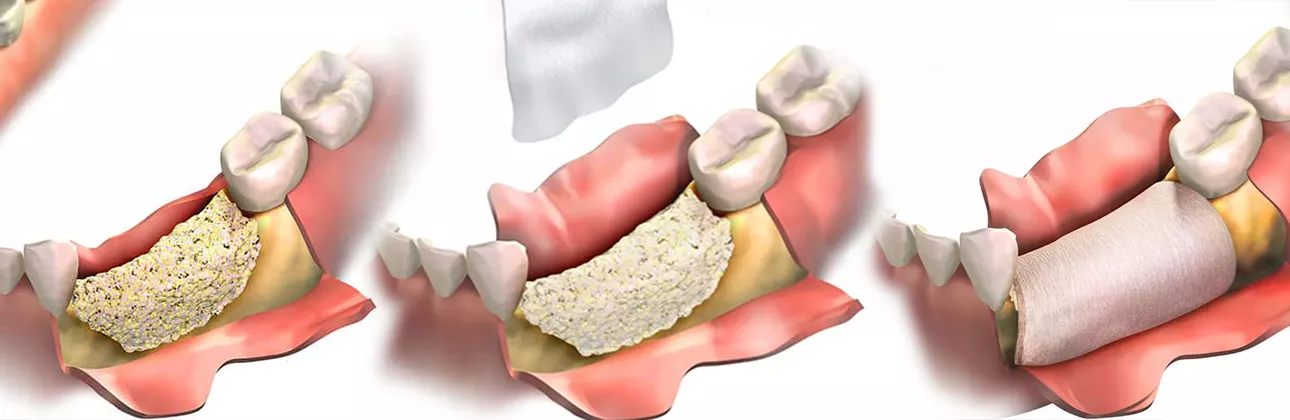
- A small incision in the gum exposes the bone beneath the implant site.
- The graft material is placed into the area requiring augmentation.
- A membrane is positioned over the graft to guide healing and protect the regenerating tissue.
- The gum is closed with sutures to secure the site.
Healing time varies based on the volume of bone being regenerated. In most cases, the graft requires several months to fully integrate before implant placement can proceed. During this period, your body forms new bone around and through the graft, building a stable base.
Patients who require bone graft and membrane implant Istanbul treatment combined with implant placement in the same session will be assessed individually. In select cases this is clinically appropriate; in others, a staged approach produces better outcomes.
If you have concerns about healing or recovery, your dentist's team will provide clear written and verbal instructions before you leave the clinic. For guidance on what to expect after surgery, our page on aftercare after bone graft Istanbul provides further detail.
Benefits of Bone Grafts and Membranes
When bone volume is insufficient for a dental implant, grafting and membrane placement are not optional enhancements — they are what makes successful implant placement possible.
- Stable implant foundationSufficient bone volume is a prerequisite for long-term implant success. Grafting restores the structural conditions the implant needs to integrate.
- Preserved facial contourBone loss after tooth extraction can alter the shape of the jaw and face. Grafting helps maintain natural volume, particularly in visible areas of the smile.
- Support for adjacent teethRestoring bone volume near neighbouring teeth can help preserve their stability and root support.
- Long-term oral functionA successful implant supported by healthy grafted bone restores normal chewing and speech function over the long term.
- Foundation for complex proceduresBone membrane implant Istanbul techniques are also central to sinus lifts, ridge augmentation, and post-extraction socket preservation. If a sinus graft Istanbul procedure is part of your treatment plan, similar principles apply.
Frequently Asked Questions
Can grafts and membranes be placed in the same visit as the implant?
In some cases, yes — this is referred to as simultaneous or immediate placement. However, many cases benefit from a staged approach, where the graft is allowed to integrate before the implant is placed. Your dentist will determine which approach is suitable based on your clinical findings.
Do I really need a bone graft before getting an implant?
If imaging confirms there is insufficient bone volume at the planned implant site, bone augmentation Istanbul is typically necessary to achieve a stable and durable result. Your dentist will review your scans and explain the findings before making a recommendation.
Is the bone graft procedure painful?
The area is numbed with local anaesthesia, so you should not feel pain during the procedure. Mild soreness and swelling in the days following surgery is normal and manageable with guidance from your treating dentist.
How long does it take for a bone graft to heal?
In most cases, the graft requires between three and six months to fully integrate with the surrounding bone. The exact timeline depends on the volume of bone being regenerated and your body's healing response. Your dentist will confirm when the site is ready for the next stage of treatment.
What materials are used in bone grafts?
Graft material may be sourced from the patient's own body, a certified human donor, animal-derived (typically bovine) sources, or produced synthetically from biocompatible compounds. At Citydent Istanbul, only internationally certified, biomedical-grade materials are used.
Can my body reject a bone graft?
Bone grafts do not trigger the same immunological rejection response as organ transplants. However, in a small number of cases a graft may not integrate as expected, which may require evaluation and further treatment. Your dentist will monitor healing at scheduled follow-up appointments.
Why is a membrane placed over the graft?
The membrane acts as a guided barrier that prevents soft tissue from filling the graft space before bone regeneration is complete. This allows the body to form dense, functional bone where it is needed most — a process central to the GBR procedure Istanbul approach used at Citydent.
Are dental membranes safe?
Yes. Both resorbable and non-resorbable membranes are manufactured from biocompatible materials and are widely used in modern implant dentistry. Adverse reactions are rare. If you have a known history of material sensitivities, inform your dentist in advance so the most appropriate membrane can be selected.
What happens if I don't proceed with a needed graft?
If a bone graft is clinically indicated and not carried out, the implant may lack adequate bone support for long-term integration. This can compromise the stability and longevity of the implant. For patients with significant bone loss, proceeding without augmentation is generally not recommended. Your implant team at Citydent Istanbul will always explain why grafting is necessary for your specific case before any treatment begins.