After Surgical Dental Treatment
What to expect after dental surgery — and how to protect your recovery from the first hour onwards.
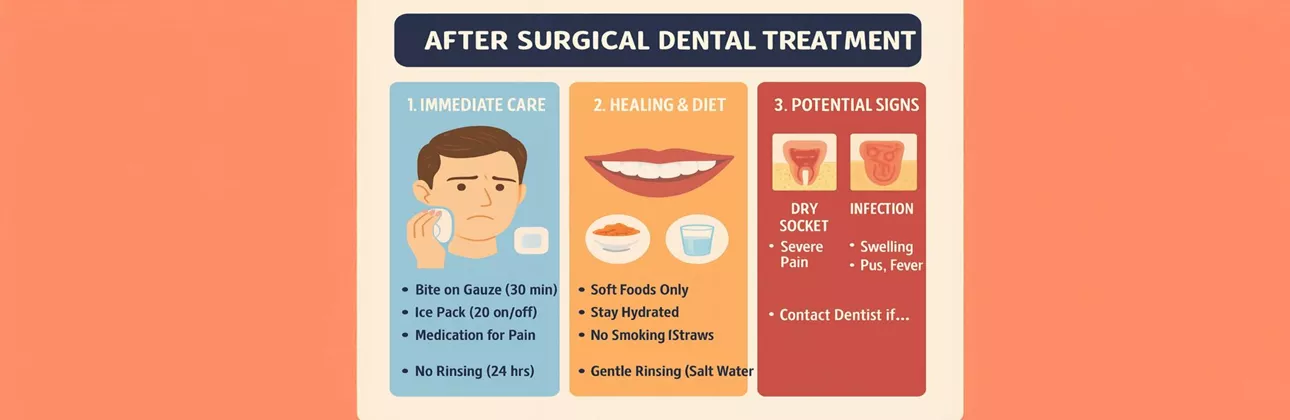
What to Expect in the First Hours After Surgery
After dental surgery care and recovery begins the moment you leave the clinic. The first two hours are the most critical for protecting the surgical wound: avoid rinsing your mouth or spitting, as this disrupts the blood clot that forms over the extraction or implant site. If gauze was placed, bite down gently for 30 to 45 minutes. A small amount of blood mixing with saliva is normal — the resulting pinkish colour should not cause alarm.
If your procedure included Platelet-Rich Fibrin (PRF), do not chew on the gauze. PRF is placed to accelerate healing, and disturbing it prolongs the clotting phase. Swallowing small amounts of blood is harmless, though you may notice darker stool in the first 24 hours — this is a normal consequence of minor blood ingestion.
Bleeding That Doesn't Settle
Most bleeding stops within an hour. If fresh red blood continues after 60 minutes, replace the gauze and bite firmly for a further 20 minutes. If bleeding remains heavy after two complete gauze changes, contact our dental clinic in Istanbul directly rather than waiting. Do not rinse with water to check the wound — this washes away the protective clot.
Managing Swelling, Bruising and Discomfort
Swelling is a normal part of dental surgery recovery, particularly after implant placement, bone grafting, sinus lift or wisdom tooth removal. It typically peaks at 48 to 72 hours and then gradually resolves over the following days. Understanding dental surgery aftercare in advance helps you manage this phase calmly and effectively.
Cold and Warm Compress Timeline
Apply a cold pack to the outside of your face during the first 6 hours — 10 minutes on, 10 minutes off. Cold compresses reduce initial inflammation. From day two onwards, switch to gentle warm compresses to encourage circulation and disperse residual swelling. Keeping your head elevated — even while resting — also reduces fluid accumulation around the surgical area.
Bruising and Jaw Stiffness
Bruising beneath the skin is caused by small amounts of blood tracking through soft tissue. It appears as a yellowish or purple discolouration, usually peaking around day three and fading fully by day 7 to 10. No intervention is required. Jaw stiffness and difficulty opening your mouth are also expected in the first few days due to swelling around the masseter muscles — this resolves on its own and responds well to warm compresses.
If discomfort feels disproportionate at day three or beyond, or if swelling is increasing rather than reducing, contact your dentist immediately. For pain relief guidance, follow your dentist's recommendations — your treating dentist will advise on the appropriate approach based on your specific procedure.
Diet, Oral Hygiene and What to Avoid After Surgery
What to Eat in the First 48 Hours
Whether the procedure involved an extraction, implant, or other oral surgery, after oral surgery nutrition plays a key role in recovery. Eat soft, cool or lukewarm foods during the first two days: yogurt, mashed potato, scrambled eggs, soft-cooked vegetables, banana and ice cream are all appropriate. Avoid hot foods and drinks — heat increases blood flow and can disturb clot formation.
Stay well hydrated but avoid alcohol, carbonated drinks and acidic juices for at least 48 hours. Avoid using a straw, as the suction pressure dislodges clots. Smoking — including vaping — should be avoided for a minimum of 48 hours after dental surgery; ideally, refrain throughout the healing period. Smoking restricts blood supply to the wound, substantially increasing the risk of dry socket and delayed healing.
Oral Hygiene Around the Surgical Site
Do not brush directly over the wound site on the day of surgery. From day two, you may resume gentle brushing of other teeth. From day three, a warm saline rinse — half a teaspoon of salt in a glass of warm water — can be used carefully after meals. Keep the site clean without disturbing it; bacterial build-up around healing tissue is the primary cause of post-surgical infection.
Stitches, Rest and Activity
Dissolvable vs Non-Dissolvable Stitches
If stitches were placed, your dentist will have specified whether they are dissolvable — typically absorbed within 7 to 14 days — or require removal at a follow-up appointment one week after dental surgery. In either case, avoid touching the stitches with your tongue or fingers. If a stitch comes loose but the wound appears closed and is not bleeding, contact the clinic for guidance.
Rest, Sleep Position and Activity
Rest properly for the remainder of the day of your procedure. Avoid strenuous physical activity — exercise, heavy lifting and vigorous movement — for at least 48 hours, as elevated blood pressure reopens surgical wounds. Sleep with your head slightly elevated on the first night to reduce swelling. For patients who have undergone implant placement, sinus lift or bone grafting, further post dental surgery instructions will be provided at your consultation — follow them precisely. For procedure-specific aftercare after dental surgery, our implant recovery guide covers rest and recovery in detail.
For detailed guidance on aftercare following an extraction procedure, see our page on aftercare after tooth extraction Istanbul. For veneer procedures, our page on veneer maintenance Istanbul covers procedure-specific recommendations.
Warning Signs — When to Contact the Clinic Immediately
Most post-surgical symptoms are predictable and manageable. However, some signs indicate a complication that requires prompt attention.
| Warning Sign | What It May Indicate | Action |
|---|---|---|
| Fever above 38°C | Possible infection or systemic response | Contact your dentist the same day |
| Swelling increasing after day 3 | Early abscess or wound breakdown | Contact your dentist promptly |
| Severe throbbing pain, days 3–5 | Dry socket (especially after extraction) | Clinic appointment required |
| Persistent heavy bleeding | Clotting problem or reopened vessel | Contact clinic or attend urgent care |
| Pus or strong odour at wound | Wound infection | Same-day dental review required |
| Numbness beyond 24 hours | Possible nerve involvement | Report to your dentist at follow-up |
Following dental surgery aftercare guidance carefully — and knowing when to contact the clinic — is the most reliable path to a smooth and comfortable dental surgery recovery in Istanbul. If you experience high fever accompanied by unusual facial swelling, spreading redness or difficulty swallowing, seek medical attention urgently rather than waiting for a dental appointment.
For bleeding after wisdom tooth removal, see our guide on aftercare after extraction Istanbul.
Your Questions About Recovery After Dental Surgery
How long does swelling last after dental surgery?
Swelling typically peaks at 48 to 72 hours and then steadily reduces. Most patients see significant improvement by day 4 to 5, with swelling fully resolved within 7 to 10 days in most cases. Procedures such as sinus lifts or bone grafts may involve a longer swelling timeline.
Can I drink coffee after dental surgery?
Avoid hot beverages — including coffee — during the first 24 to 48 hours. Hot liquids increase blood flow to the surgical area and can disrupt clot formation. Once swelling has settled and the wound has closed (typically from day 3), most patients can resume normal beverages.
When can I resume exercise after dental surgery?
Rest for at least 48 hours before any physical activity. Light walking is generally acceptable from day 2 to 3. For more intensive exercise, wait until swelling and discomfort have resolved — typically 5 to 7 days for most extractions, and longer following implant surgery, bone grafting or sinus lift procedures.
Is it normal to have difficulty opening my mouth after surgery?
Yes. Temporary trismus — restricted jaw opening — is a common response to surgical swelling around the jaw muscles and joint. It typically resolves within 7 to 10 days as swelling reduces. Gentle warm compresses and controlled jaw movements help. If it persists beyond two weeks or is accompanied by increasing pain, consult your dentist.
What should I do if my stitches come out early?
If a stitch loosens before your follow-up appointment, assess the wound: if it appears closed, is not bleeding and causes no unusual pain, contact the clinic for guidance at your next opportunity. If the wound appears open or begins to bleed, contact the clinic the same day.
Do I need a follow-up appointment after dental surgery?
Yes. Most surgical procedures at our dental clinic in Istanbul include a post-operative check. For implant procedures, follow-up appointments are scheduled as part of the treatment protocol. For extractions, stitches (where applicable) are reviewed at the one-week mark. If you have concerns between appointments, contact us directly.